Truck Courts and Access Roads for Data Centers
Pavement is the least glamorous part of a data center and one of the most punished. Transformers arrive on low-boy trailers, generators come in on heavy haulers, cooling equipment is set by cranes whose outriggers load the ground like point footings, and once the building is running, fuel tankers and service trucks visit for the life of the facility. The roads and courts that carry all that traffic have to be designed as structures, with a subgrade and thickness chosen for the loads they will really see.
We build the truck courts, loading and receiving areas, fire lanes, access roads and visitor parking for Oklahoma data center campuses. That includes the subgrade preparation, aggregate base, asphalt or concrete paving, joints, curbs, striping and signing. On a campus with several buildings it also includes the internal loop road that lets a fire truck or a fuel delivery reach every yard without backing up.
Done well, pavement is invisible. Done badly, it ruts under the first crane pick, pools water against a loading dock, or cracks along a utility trench that settled. Most of the failures we are asked to repair trace back to decisions made in the first month of the job, before anyone thought about trucks.
Loads, turning radii and the first heavy delivery
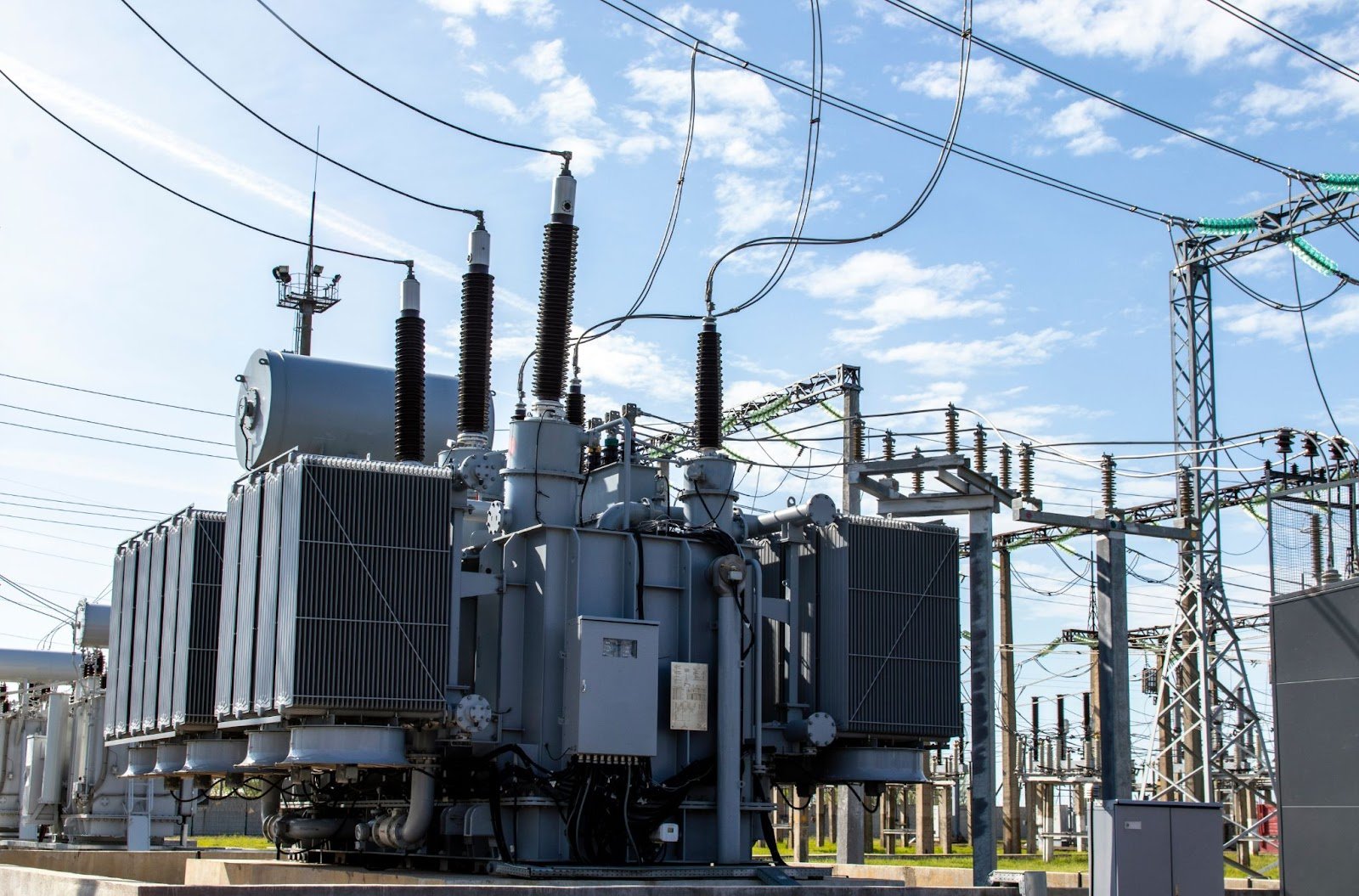
The heaviest vehicle visits the site only a few times, but it sets the pavement design. A large transformer or a generator set can weigh more than a loaded highway truck, and it moves slowly and turns wide. We ask the equipment suppliers for delivery weights and trailer dimensions and use them to check the design: thickness, turning radii at the gate and the court entrance, and the clearance for overhead lines and bridges along the route.
Temporary loads matter just as much. Crane pads and outrigger mats take loads that normal pavement is not rated for, so we either design the permanent court to handle them or place separate temporary pads and remove them afterward. Building the permanent base early and keeping construction traffic off the finished surface course is the cheapest way to avoid a repave. The same thinking applies to the generator and fuel yard, where a tanker needs hard standing within reach of the fill ports.
Why Oklahoma freight geography matters
Where a campus sits relative to freight corridors changes its road costs. The state's Department of Commerce reports that three interstates meet in Oklahoma, that Class I rail totals more than 2,600 miles, and that the McClellan-Kerr navigation system covers 445 miles of waterway, with the Tulsa Port of Catoosa among the largest inland ice-free river ports in the country. Heavy electrical equipment can arrive by barge or rail and finish its trip by truck, which makes the last miles of road the weak link at the Port of Catoosa and similar sites.
At the MidAmerica Industrial Park in Pryor, a 9,000-acre campus with a custom electricity provider, the infrastructure is more developed, though internal roads still have to carry oversize loads. Our work at Pryor and similar parks usually starts with a survey of the existing haul route, including bridges and intersections, before we promise a delivery date.
What we construct
The base of a good court is its subgrade. We proof roll, undercut soft spots and stabilize with lime or cement where the soils require it, then place and compact aggregate to the thickness shown. Asphalt is placed in lifts at the temperatures the mix requires, while concrete courts are jointed to control cracking and doweled across joints that will carry wheel loads. Loading dock aprons are often concrete because of the standing weight of trailers and the landing gear's concentrated load.
Accessories complete the job. Curbs and gutters guide water to inlets, striping marks fire lanes and parking, signs tell drivers where to go, and bollards protect equipment. Fire lanes need specific width and turning dimensions, and the fire department may inspect them before the building is occupied. Our concrete slab experience carries into dock aprons and heavy courts, where flatness and joint layout affect how trucks and pallet movers behave.
When to build it
A common mistake is to pave last because it is last on the drawings. On a data center the first truck court is needed early, since equipment deliveries start long before the building is finished. We usually build the base course for roads and courts right after mass grading, use them for construction traffic, and then place the final surface once the heavy work is done. That plan reduces mud, keeps the neighbors happier and gives the owner a ready road for commissioning visitors.
Weather decides when asphalt can be placed, and concrete placement has temperature limits too. In Oklahoma, wet springs and cold snaps can compress the paving window, so we reserve trade partners and material early in the schedule. Where the project is on a compressed timeline, our fast-track scheduling approach overlaps paving with finishes inside the building.
Fire access and approvals
Access roads have to satisfy the fire code, the county or city, and sometimes the state. Fire apparatus roads have minimum width, clearance and load requirements, and dead ends need turnarounds. Oklahoma's statewide minimum codes are being updated to the International Codes, but each city adopts and enforces its own edition, so we confirm the version in force on the project. Driveway connections to public roads need permits from the road owner, and a turn lane or traffic study may come with them. We handle those approvals alongside the rest of the site, and bring them to the permitting and utility interconnection schedule.
For owners that need controlled access, the gate area becomes a design problem of its own. See the security perimeter work for how queuing lanes and inspection areas are integrated into the court.
Who needs it
Developers of speculative campuses value roads that can serve any future tenant, which means wide turns and heavy sections. Site owners and developers in industrial parks often build the main spine road first and rely on tenants to extend it.
Heavy deliveries coming?
Send the equipment list and the site plan. We will check the haul route and price courts and roads built for the actual loads.
Common Questions
Asphalt or concrete for a data center truck court?
Both are used. Concrete suits loading aprons, dock areas and places with standing or turning heavy loads, while asphalt is common on long access roads and parking. The choice follows the load, the maintenance plan and the budget.
Can construction traffic use the permanent road base?
Yes, and it often should. A well-built base handles construction traffic, then receives the final course after the heavy work is finished. We protect the subgrade and repair any damage before final paving.
How wide do the fire lanes need to be?
The fire code and the local fire marshal set the width and turning radius. We build to the approved plan and confirm the dimensions in the field before final inspection.
What causes pavement to fail around utility trenches?
Poor backfill compaction. A trench that settles shows up as a crack or dip in the pavement above it. We compact trench backfill in lifts and test it before the base is placed.
Will the oversize loads need route studies?
Usually yes. Transformers and large generators can exceed normal permit limits. We help the supplier check bridge clearances, turning points and permit timing so the delivery date holds.
Plan Your Oklahoma Data Center Project
Tell us about the site, the power and cooling plan and the schedule, and we will set up a review of scope, schedule, permits and inspections.
Request a Project Review