Data Center Construction in Oklahoma
Power decides a data center site before the dirt does, and in Oklahoma the order of operations follows from that. We start a build by finding out where the utility can deliver service, how long the interconnection study will run, and what the county expects to see before it will rezone. The building comes second. A shell that is ready eight months before the substation is energized is an expensive empty box.
The state gives operators real reasons to look here. The Oklahoma Department of Commerce reports that Oklahoma produces 61% more energy than it consumes, that renewables generate 47% of the state's electricity, and that energy costs run 17% below the national average. Those numbers show up in the first conversation with every developer who calls us, and they are why a rural parcel with a transmission line nearby can beat a coastal metro lot that is already built out.
We build the whole physical stack for mission-critical facilities: the site work, the shell and core, the mission-critical slabs, the generator yard and cooling plant, and the coordination that gets electrical and mechanical systems through commissioning. This page describes how we sequence that work for an owner who wants a data center in the state and wants to know what happens between purchase of the land and the first live rack.
Why Oklahoma is drawing data center capital
A single announcement shows how large the pipeline has become. A $1 billion, 2-million-square-foot data center was announced in April 2026 at the 2,000-acre Fair Oaks industrial innovation park in east Tulsa, with operation expected in 2028 and more than 1,000 construction jobs at peak. We cite it as market context only; it is a sign of the labor demand every other owner in the state will compete against for concrete finishers, electricians and heavy equipment operators.
Cheaper land and a power-rich grid are the draw, but they come with obligations. Rural counties want to know what the project does to roads, water and the tax base, and utilities want load forecasts they can plan substations around. Owners who bring a clear phasing plan to those meetings get faster answers, and our preconstruction work is built to produce that plan early. See how that works in preconstruction and estimating.
What a full data center build includes
The scope starts at the property line. Mass grading and drainage come first, then the utility corridors: the electrical duct banks, fiber routes and, where the site calls for it, a cooling water supply line. The building follows, either as a tilt-up or precast shell or as structural steel with insulated metal panels, with an interior fit-out that depends on whether the owner is delivering powered shell, shell and core, or fully built data halls.
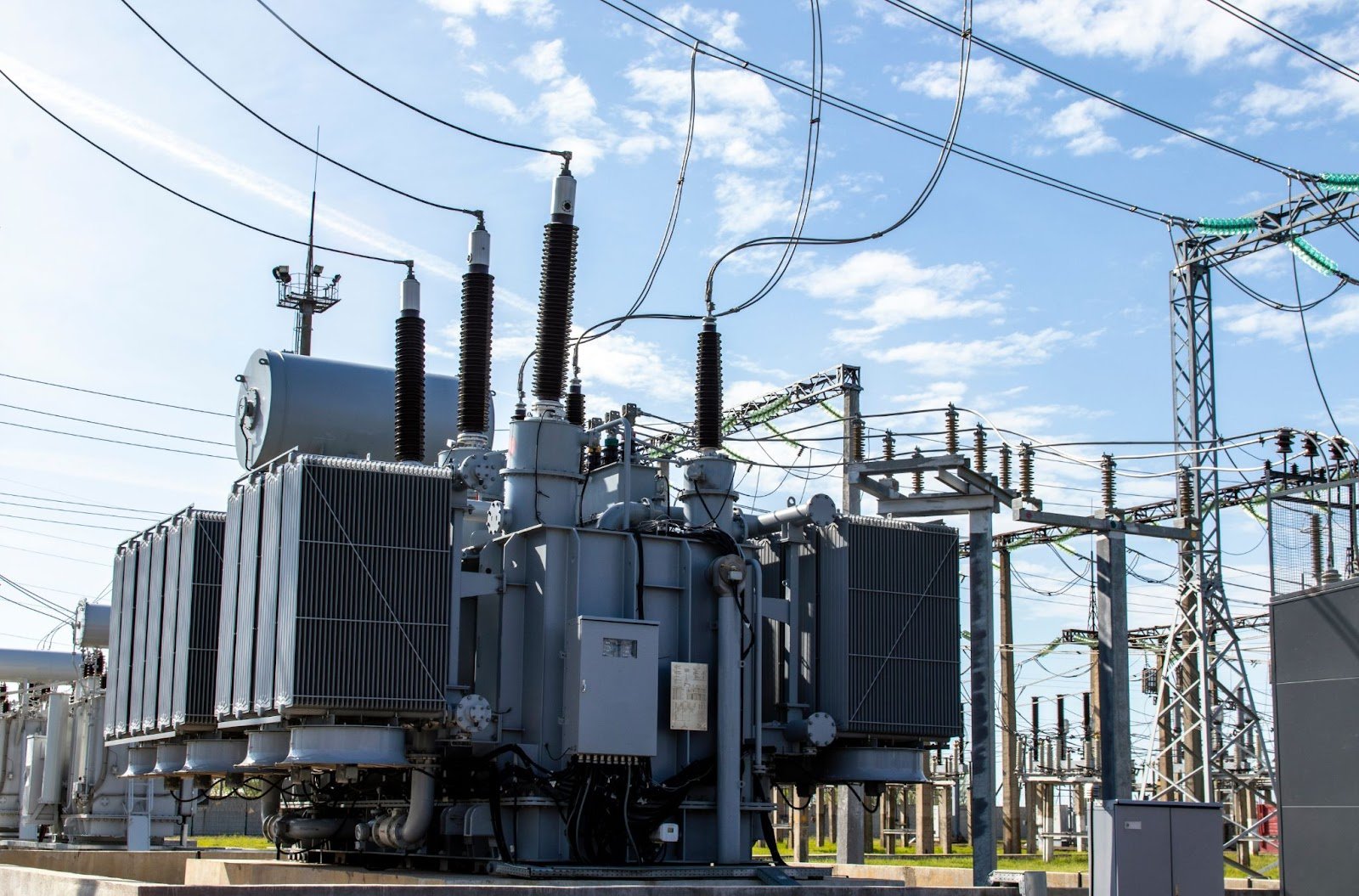
Outside the walls sits the equipment that keeps the building alive: generator yards with fuel storage, chiller and cooling plant pads, and on-site substation work when the utility hands the owner a yard to build. Each of these has its own long-lead items and its own inspector. We keep them on a single schedule so the generator pad is cured before the generators arrive, and not the other way around. For the structural side, see our work on shell and core construction.
Early work with the utility and the county
We bring the utility into the conversation before design is frozen. Interconnection requests carry their own queue, study fees and equipment lead times, and the answers shape everything downstream: building footprint, generator count, whether a dedicated substation is required. Counties get the same treatment. Incentive discussions, road-use agreements and rezoning hearings all move faster when someone from the construction side can answer questions about truck traffic and construction hours.
Our permitting team handles the paper trail with both. That includes the interconnection agreements, water permit applications where cooling needs them, and the city or county plan review. The details are in permitting and utility interconnection. Doing this work in parallel with design, rather than after it, is the single largest schedule saver we can offer an owner.
Codes that apply on an Oklahoma data center
The Oklahoma Uniform Building Code Commission has adopted newer International Codes, including the building, fuel gas, mechanical and plumbing codes, with amendments. Cities adopt and enforce their own editions, and many still list an earlier set, so the first task on any project is to confirm which edition and which local amendments govern the parcel. A building permit applied for under one edition can be reviewed against another if the effective date falls in the middle of design.
The state does not license general contractors, but electrical, mechanical and plumbing work require licensed trades, and a data center is mostly those trades. We verify every trade license on our subcontractor list and keep them on file for the city. Fire code review of generator fuel storage can run long, so we start that conversation with the fire marshal as soon as the fuel system is sketched.
Sequencing the schedule around long-lead equipment
Switchgear, transformers, generators and chillers set the critical path, not the building. We schedule backward from the date the owner needs capacity, placing equipment order dates, pad completion dates and set-in-place dates on one chart. A late transformer can push energization by months, so our procurement team tracks manufacturer status and flags slips while there is still time to resequence interior work.
Weather matters in a state where May is the peak month for tornadoes and spring storms regularly interrupt pours and crane lifts. We build float into the schedule for those weeks and use temporary enclosures and tested dewatering so the slab and electrical rough-in stay on track when the forecast turns. Details on how we compress schedule without cutting corners are in fast-track scheduling.
Where this service connects to the rest of the work
A general data center build touches nearly every other service we list. Owners planning multiple halls often pair it with phased expansion build-outs, so the first hall is energized while the second is still under foundations. Operators with very large campuses should read about hyperscale campus construction, where the utility yard and cooling plant become projects in their own right.
We also work for the people behind the data center. Developers who control land and power rights often hire us to build the shell for a future tenant, and utilities hire us for the interconnection yards. Both are described in our pages for real estate developers and site owners and utilities and power developers.
Talk to us before the utility study starts
Send us the parcel, the load target and your timeline. We will tell you what the utility, the county and the schedule are likely to ask for, and what it will take to get power on.
Common Questions
How early should we involve a builder if we only own the land?
Before you commit to a design. Utility interconnection and county rezoning set the real schedule, and a builder who has been through both can tell you which parcel conditions are cheap to fix and which are not. We often do a short feasibility pass that covers access, drainage, flood zone, fiber routes and the likely substation location. That pass costs far less than redesigning a building after the utility says it cannot serve the site.
Does Oklahoma require a state license for a data center general contractor?
No. The Construction Industries Board states that general contractors are not currently required to hold a state license for general contracting. Electrical, mechanical, plumbing and roofing work still need licensed trades, and the city or county may ask for proof of those licenses. We keep trade licenses current on file for every project.
Which building code edition applies to our project?
It depends on the city or county. The state adopted newer International Codes, but cities adopt and enforce their own editions and amendments, and many still list an earlier set. We confirm the governing edition with the building department before design is released, and again before the permit application is filed.
Can we build in phases and keep the first hall producing revenue?
Yes, and it is the common approach. The key is to size the site infrastructure for the full buildout, including the utility corridor, drainage and the cooling plant footprint, and then finish halls as the load grows. We separate construction traffic and power from the live hall so tenants are not disturbed by the next phase.
What drives the cost of a data center build more than anything else?
The electrical and mechanical systems, followed by site work if the parcel is far from existing utilities. Building shell costs are modest by comparison. Decisions on redundancy, generator count and cooling method move the budget more than any choice about wall panels, which is why we price those systems early.
Plan Your Oklahoma Data Center Project
Tell us about the site, the power and cooling plan and the schedule, and we will set up a review of scope, schedule, permits and inspections.
Request a Project Review