Data Center Construction in Choctaw, Oklahoma
Fiber follows the roads, and a data center in Choctaw depends on both: a conduit path that reaches the building from more than one direction and a driveway that heavy trucks can use without waiting on city streets. We build for owners who care about those two items first, then work outward to power, cooling and structure.
Choctaw is about ten miles east of Oklahoma City, with the I-40 corridor on its southern side. A state project is now rebuilding the I-40 and Choctaw Road interchange and widening the surrounding roads, which will change how traffic reaches nearby land. For a data center owner, that is both an opportunity and a schedule risk, and we plan for both.
Our work includes duct banks, service entrances, handholes, building pads, access drives and the shell itself, and we coordinate with the utility so electric service arrives when the building is ready. The coordination is often the longest part of the job.
Working beside live highway construction
Roadwork changes the safety plan for everyone near it. Haul trucks, concrete mixers and cranes share ramps and frontage roads with commuters and state contractors. We write a traffic control plan for our own deliveries, keep trucks off roads during peak periods where possible, and agree on flagging and lane closures with the state transportation department and the city.
On the site itself, we set up fenced work zones, locate underground utilities before any trench opens, and brief the workforce on lockout rules when energized lines are near. Dust and mud tracked onto public roads are controlled with wash stations and sweeping, and we keep a daily log of site conditions. Any near miss is reviewed that day, and the lesson goes to every trade partner before the next shift starts.
A corridor in motion
The state project at I-40 and Choctaw Road, covering mile markers 165 to 167, converts the interchange from a partial cloverleaf to a full diamond. It also adds capacity to I-40, six lanes plus auxiliary lanes, over the section between Peebly Road and the I-240 junction, and gives Choctaw Road four lanes along the stretch bounded by S.E. 71st Street and S.E. 78th Street.
Owners should read that as a signal about access. Better ramps and wider roads shorten truck trips and may open nearby parcels, while construction can restrict entry for a period. We track the project's published schedule, and we site driveways to match both the current and the final road layout. Compared with Midwest City and Del City, Choctaw offers more open land, with less established infrastructure.
Sequencing around the interchange and the utility
We divide the schedule into three tracks that run together: approvals and utility requests, site and underground work, and the building. The fiber survey and carrier requests start at the beginning, since a carrier needs weeks or months to build a route. The utility's study defines the energization date, and we hold it as the target for every other task.
When road work limits access, we move deliveries to times and routes that stay open, stage materials on site, and avoid scheduling large equipment during closures. Our fast-track scheduling approach overlaps design and early construction, with the owner's agreement on risk. Each overlap is listed with the cost of being wrong, so the owner can accept it or hold the work until a design decision is final.
Fiber, duct bank and building entrance work
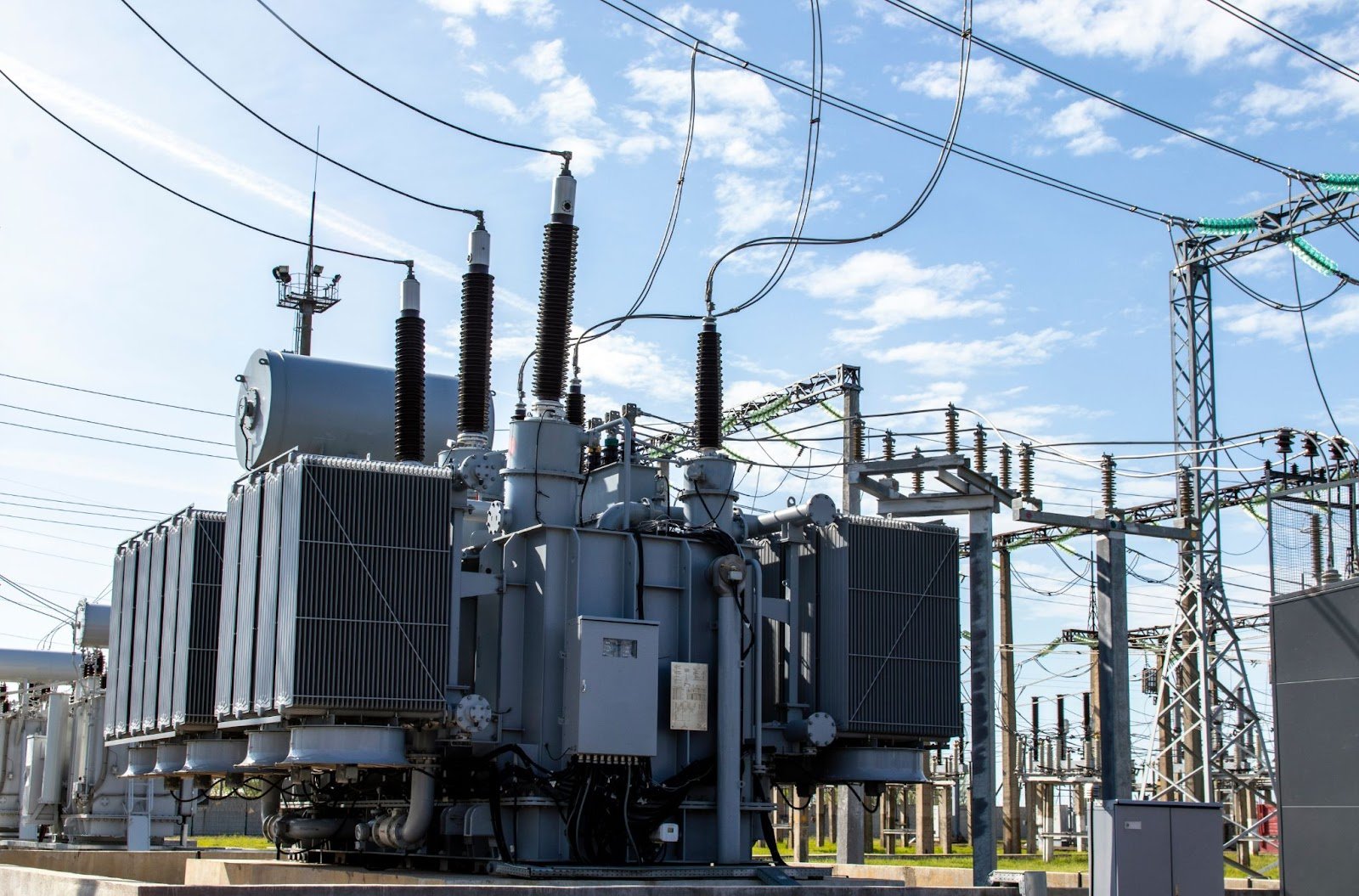
The connectivity scope includes conduit paths from the street to the building, handholes, a protected entrance room and, for larger projects, a carrier hotel and meet-me room. We design for at least two physically separate entrances and we mark every conduit on as-built drawings. Under electrical duct banks and service entrances, concrete-encased conduits carry power from the transformer to the switchgear.
For site access, we build the drive, the turning area and the truck court to the weight of the heaviest delivery, and we place the gate away from the road so a waiting truck does not block traffic.
Cost items tied to connectivity and access
The cost of a fiber route depends on distance, soil, crossings of roads and creeks, and whether the carrier pays for part of the work. Roadway changes can add driveway modifications, signals or turn lanes, which the owner should expect to pay for if the project triggers them.
Power is the largest variable. A short line extension is a minor cost, while a new substation is a major one. We ask the utility early for the likely scope and cost share, and we present the owner with a range, a list of assumptions and the date when the numbers become firm.
Utilities and power developers sometimes join a project to share a substation or a transmission corridor, and that can lower the owner's share of the work. It can also add a second approval process and a second schedule, so we ask who controls each decision before the agreement is signed.
Working with the utility, the state and the carriers
The community spreads over roughly 27 square miles of the Cross Timbers ecoregion, with ground near 1,155 feet, so tree cover, creek crossings and soil must be checked on each parcel. We walk the land with the surveyor, check the soil report and mark where the duct bank, the building and the yard fit.
Then we hold one meeting with the utility, the carrier and the city, so each hears the same plan. The Eastern Oklahoma County Technology Center is also located in Choctaw, and the community mostly sits in the Choctaw-Nicoma Park School District, which gives owners a local source of technical training. We say so as local context, and we discuss utility substation site work in the same meeting when the load is large.
Siting a connected building in Choctaw?
Send the parcel and the load. We will check fiber routes, road access and the utility timeline, then give you a plain summary of what the site can support.
Common Questions
How does the I-40 interchange project affect a data center site?
It improves long-term access but can restrict entry during construction. We check the published schedule, plan the driveway for the final layout and set delivery routes that remain open during closures.
How many fiber routes should a building have?
Two physically separate entrances is the usual target, from different directions and different carriers. We map the conduit paths so that one dig-in cannot cut both, and we ask each carrier to confirm that its route does not share a trench, bridge or pole line with the other. A building with two entrances that run side by side has only one real path.
Who pays for a driveway or a turn lane?
It depends on the permit conditions. If a project adds traffic that needs a modified access, the owner usually pays. We find out at the pre-application stage so the cost is in the budget.
Can the utility serve a large load near Choctaw?
That depends on local capacity, which only the utility can confirm. We submit a clear load request and report the answer, including any need for new lines or a substation.
Plan Your Oklahoma Data Center Project
Tell us about the site, the power and cooling plan and the schedule, and we will set up a review of scope, schedule, permits and inspections.
Request a Project Review