Utility Substation Site Work for Data Centers
A substation does not care about your opening date. It is built when the utility has the equipment, the right-of-way and the crew, and the owner's building can be finished a year early and still sit dark. That is why substation site work is the first item we price for a large data center, and why we start talking to the utility before the building has a floor plan.
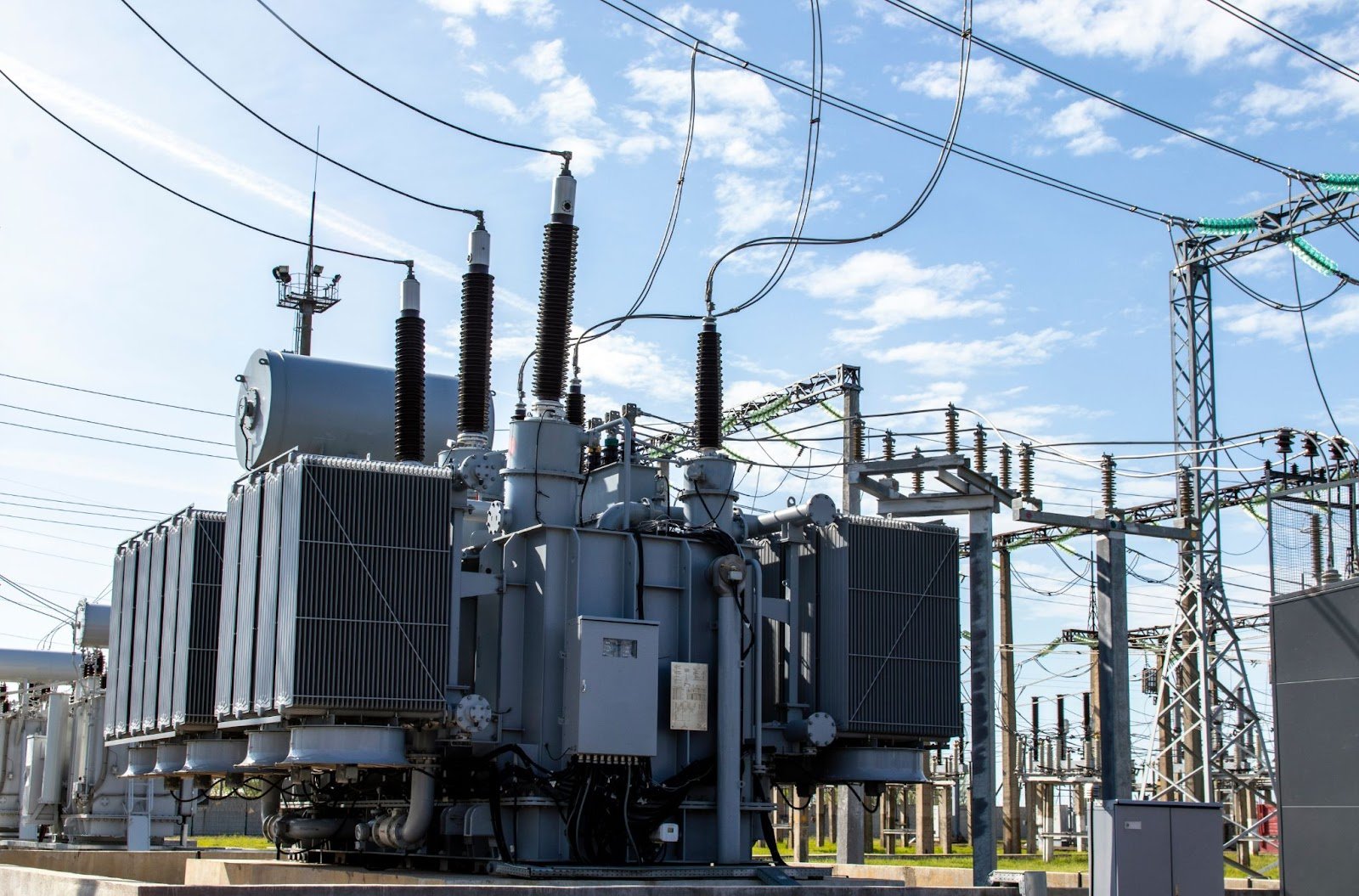
The work divides into two parts. The utility, or a utility-approved contractor, sets the transformers, breakers, switches and relays. We build everything the equipment sits on and inside: the graded and compacted yard, drainage, foundations, oil containment, the grounding grid, conduit and trenches, the control building pad, the fence and the access road. Where the owner builds a customer-owned yard beside the utility's, we build that as well.
The details differ from one utility to the next. Each has its own standards for foundations, rock surfacing, grounding and fencing, and an installation that is built to the wrong drawing is rebuilt. We obtain the standards early and build to them.
Power in Oklahoma and where the substations go
The Oklahoma Department of Commerce reports that the state produces 61% more energy than it consumes and that the Traverse Wind Energy Center is 998 MW. Generation is not the same as delivery, but it explains why transmission and substation additions are a regular part of the state's growth and why data center developers approach utilities and generation owners early.
Wind farms are concentrated in the western half of the state. Federal energy data lists a second Woodward County wind farm at 198.6 MW, with its first unit online in September 2018. Moving that kind of energy to a load center requires lines and yards, and a data center that plans around a new substation has to be sure of the schedule that goes with it. We bring the same discipline to the owner's side of the fence.
Working in the utility's sequence
The utility sets the dates, so our first task is to learn them. We ask for the design standards, the equipment delivery schedule, the right-of-way status and the outage calendar for any existing lines. Then we build the site work schedule to finish just before the utility's crews need to set equipment, not months early and not a week late.
Utility crews work to their own safety rules, and we coordinate with them on access, clearances and temporary power. When a yard is built next to an energized line, we plan the crane and equipment paths and set exclusion zones. Our work with the utility is part of a larger process described under permitting and utility interconnection.
Standards and approvals for a yard
A substation yard is governed more by utility standards than by building code, though local grading, drainage and fence permits still apply. The National Electrical Code, which the state has adopted, governs the customer-owned electrical work inside the data center, and we keep the line between utility-owned and customer-owned work clearly marked in the drawings.
The park's own materials say custom electricity at MidAmerica Industrial Park in Pryor comes from the Grand River Dam Authority. Where the supplier is a public authority and not an investor-owned utility, its standards and approval process may differ. We ask who the provider is before we assume anything about its requirements.
The site work we build around the equipment
We clear and grade the yard to the utility's elevations and compact it to the design, then install drainage that carries water away from foundations and out of the yard. Foundations for transformers, breakers, switchgear and structures are poured next, followed by oil containment where the design requires it. The grounding grid is placed in the base before the crushed rock surface is spread.
Conduit and cable trenches run from the yard to the control building and to the data center. We manage installing, testing and capping them so the utility or the electrical contractor can pull cable on schedule. Related underground work is described on electrical duct banks and service entrances, and the building type is covered at on-site substation yard.
Fencing and security close the scope. Utility yards need a fence and gate built to the utility's standard, and a data center owner usually wants its own security line outside it. We lay out both so that utility crews can reach the yard around the clock without passing through the data center, and so that the owner's guards control everything else. Lighting, signage and grounding of the fence are handled in the same package.
Equipment lead times and outage windows
Large transformers and breakers have some of the longest lead times in the project. We encourage owners to order them as soon as the utility approves the design, and we track delivery dates from the factory. Our yard foundations are timed to be cured before delivery, and the crane access is cleared.
If the project connects to an existing line, outage windows are limited and set by the utility. Missing one can push energization by months, so we schedule the final tie-in work with generous float. The same practice runs through our long-lead equipment procurement service.
Utilities and the owners they serve
We work with utilities and power developers who need site work built to their standards, as described on our utilities and power developers page. We also work with data center owners who must build their own yard under a utility agreement, and with developers who must prepare a site before the utility arrives.
For the largest campuses, the substation is the biggest piece of shared infrastructure, and we plan it with the campus master plan. See hyperscale campus construction for how those pieces come together.
Start with the utility's standards
Send us the utility, the load and the target date. We will request the standards, build a site work schedule around the equipment delivery and price the yard.
Common Questions
Who owns the substation, the utility or the data center owner?
It varies. Some utilities own the yard and serve the customer from it, while others require a customer-owned yard with a utility metering point. The agreement decides who pays for what and who builds what. We help the owner understand the agreement before design is finished.
Can you build the yard before the utility approves the design?
We advise against it. Utility standards for foundations, grounding and layout vary, and building early can mean tearing out work. We can prepare the site, build access roads and complete grading while waiting for approval.
How long does substation site work take?
The site work itself is usually shorter than the equipment lead time. The overall schedule depends on utility approval, equipment delivery and outage windows, not on how fast we pour foundations. We schedule our work to finish before the equipment arrives.
What happens if the yard is in a floodplain?
We review the mapped floodplain with the engineer and the utility. Elevating the yard, raising foundations and protecting control equipment are standard responses, and the utility's own standards may set a minimum elevation.
Do you work with electric cooperatives and public authorities?
Yes. Public power authorities and cooperatives have their own standards and approval steps, and we follow them. Each organization has a different process, so we ask for its requirements during site selection.
Plan Your Oklahoma Data Center Project
Tell us about the site, the power and cooling plan and the schedule, and we will set up a review of scope, schedule, permits and inspections.
Request a Project Review