On-Site Substation Yard Construction in Oklahoma
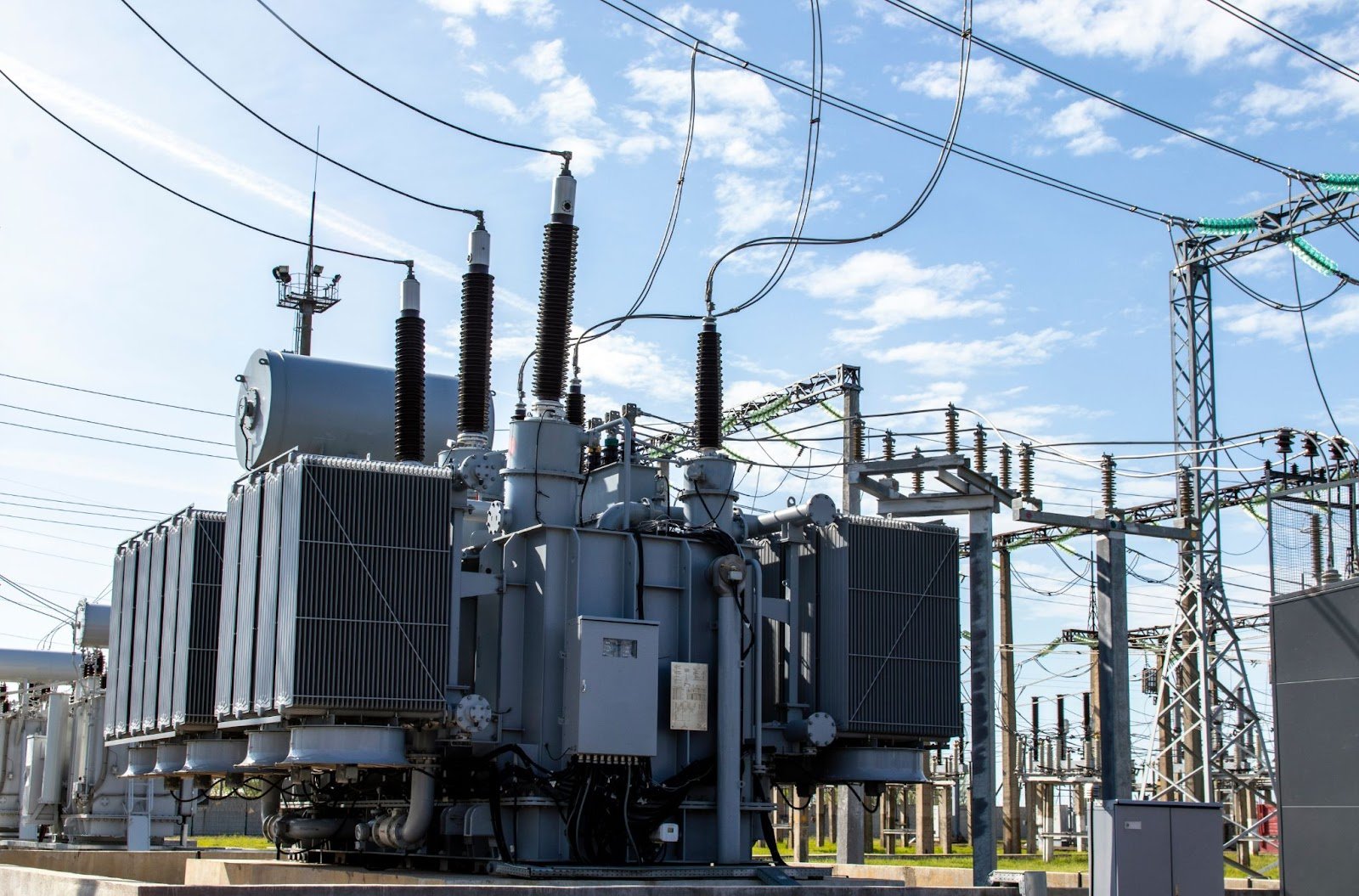
Interconnection studies, not the concrete, set the date for a substation yard. A data center that needs hundreds of megawatts cannot connect until the utility has studied the transmission system, identified the upgrades, and agreed to a cost and an in-service date. The owner's yard, which steps transmission voltage down to the voltage the campus uses, is built to those agreements, and our job is to have it finished when the utility is ready to energize.
Oklahoma's power story helps. The Oklahoma Department of Commerce states that the state produces 61% more energy than it consumes and that energy costs run 17% below the national average. Federal energy data lists Persimmon Creek Wind Farm 1 in Woodward County at 198.6 MW nameplate capacity and Boiling Springs Wind Farm at 148.4 MW, and a Custer County wind park is described as planned for as many as 98 turbines of 1.5 megawatts each. Those facts point to generation in the northwest and west, while the largest loads are likely to arrive near the metros and the industrial parks. The yard is where the two meet.
We separate what the utility builds from what the owner builds. Typically the utility owns the transmission line and the metering point, and the owner builds the yard, transformers, breakers, protection and control building. Where the owner is also the developer of a power project, as with an on-site generation joint venture such as the one announced for a Chickasha industrial park, the interface is different, and we draw it carefully.
Treating the yard as its own project
A yard has its own engineer, its own permits, its own schedule and its own inspections. We organize it as a separate work package under a project manager who speaks to the utility directly. The design basis, the protection scheme and the equipment submittals are reviewed by the utility, and nothing in the yard is energized without its approval.
The civil work is the part we control. We grade the pad to the drainage design, install the grounding grid, pour transformer foundations and oil containment, set cable trenches and conduits, and place a control building. The grounding grid in particular must be tested before the yard is covered with stone, so we schedule that test as a hold point. Our utility substation site work service describes the civil scope.
The long-lead items that decide the date
Large power transformers have among the longest delivery times of any equipment on a data center project. Breakers, relays and switchgear follow. We recommend that the owner place orders as soon as the design basis is frozen and the utility has confirmed the interconnection voltage, and we treat long-lead equipment procurement as a preconstruction task.
While the equipment is being built, we complete the pad, the underground and the control building. The aim is that the yard is ready to receive equipment the week it arrives and ready to be tested when the utility's line is complete. If the line is delayed, the owner may want temporary power from a generator or a temporary feeder, and we plan for that option in the schedule.
Standards, studies and inspections
Substation work is governed by utility standards, the National Electrical Safety Code for utility-owned lines, and the National Electrical Code for customer-owned equipment. The state commission adopted a newer National Electrical Code, and local jurisdictions may enforce an earlier edition. We confirm which edition applies to the customer side and follow the utility's standard for its own side.
Permits include grading, stormwater, building for the control house, and sometimes floodplain development permits. Tulsa County's levee system has been described by the Army Corps of Engineers as in the top 5% at risk for failure, with state and federal funding proposed for repairs, so yards near that river system need a flood review before the pad elevation is set. See our guidance on permitting and utility interconnection.
Siting a yard in wind country
Wind country is open land, long distances and exposed weather. A yard in the northwest or the west receives strong winds, lightning, and in some seasons ice. We design for lightning protection, wind loads on equipment and conductors, and access in poor weather. Gravel surfaces, oil containment and fencing are designed to the environment.
Siting also depends on the wind farms' own interconnections, because the grid in those areas is busy with generation. A reported 123 MW wind farm near Elk City, with 82 turbines commissioned in June 2009, is another example of how much generation already exists in the west. A data center load that arrives in the same corridor may help balance the grid or may require upgrades, and the utility's study decides. Woodward is a good example of an area where generation, rail and open industrial land meet.
Yard and campus interface
Beyond the yard, we build what carries power to the campus: duct banks or overhead lines, the main service entrance and the medium-voltage switchgear room. Electrical duct banks and service entrances describes how we route and encase those runs. The yard also connects to the central utility plant and, where backup power is required, the battery energy storage yard. For utilities and power developers, we build to their specifications and inspect to their hold points.
Send us the interconnection study
Share the utility's feasibility or system impact study, the single-line diagram and the target energization date. We will respond with a yard plan, a long-lead list and a schedule showing where the utility's work meets ours.
Common Questions
Who builds the substation: the utility or the owner?
Both, depending on the agreement. The utility usually builds its line and metering point, and the owner builds the yard and protection on the customer side. The split is written in the interconnection agreement, and we study it before we price. If the owner is paying for upgrades on the utility side, we also track that cost against the budget so the two sets of numbers stay comparable.
How long does a transformer take to arrive?
It varies, but large power transformers are among the longest lead items on any project. We recommend ordering as soon as the design basis is frozen and tracking factory milestones monthly.
Can we get temporary power while the permanent yard is built?
Sometimes, through a temporary feeder or generators. That option requires utility approval and adds cost, but can allow construction and commissioning to start earlier.
What goes wrong most often on yard projects?
Late interconnection decisions, late equipment orders and grounding or drainage problems found after the stone is placed. We use hold points for grounding tests and review the drainage design against the actual grade.
Do you build yards for power producers as well as data centers?
Yes. The civil and electrical coordination is the same whether the yard serves a data center load or a generation project, though the protection design and the utility's hold points differ. We ask for the utility's construction standards on the first day and keep a log of every approval, so the energization inspection finds no surprises.
Plan Your Oklahoma Data Center Project
Tell us about the site, the power and cooling plan and the schedule, and we will set up a review of scope, schedule, permits and inspections.
Request a Project Review