Central Utility Plant Construction in Oklahoma
Water arrives at a data center site as a permit before it arrives as a pipe. A central utility plant for a data center houses chillers, cooling towers or dry coolers, pumps, heat exchangers, thermal storage and the controls that tie them together. It is a building and a yard at once, and in Oklahoma it is the item most affected by where the site is, because water supply, flood exposure and wind all vary widely across the state.
The Oklahoma Water Resources Board promotes the 2025 Oklahoma Comprehensive Water Plan, lists water permit applications and a pending water use permits dashboard, and carries a banner on its home page pointing to a $24 billion water infrastructure need. For an owner, that language means water is a planned resource, and a plant designed around an assumed supply may need to change. We bring the water question into the first meeting with the owner, the engineer and the municipal or rural water provider.
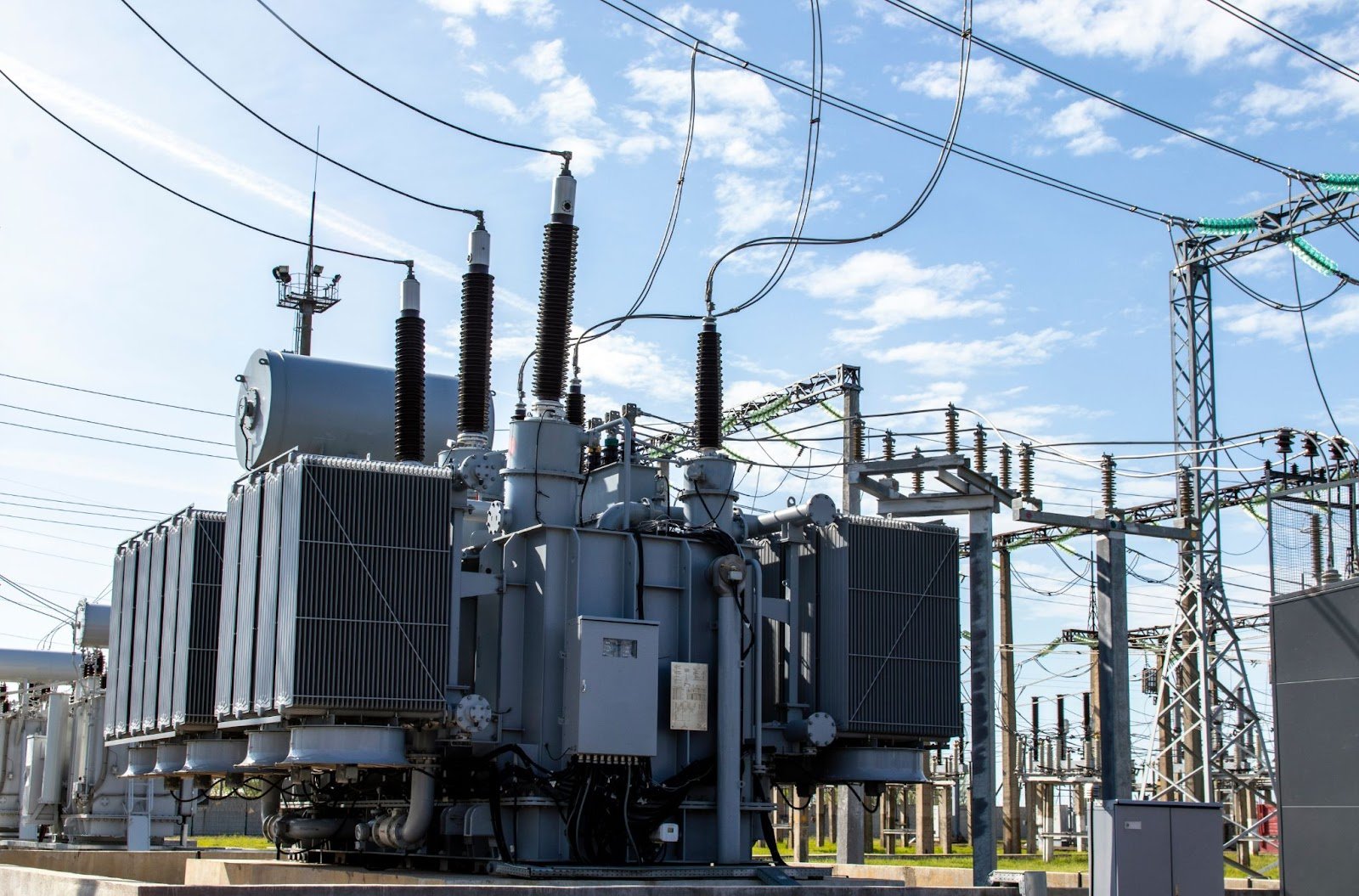
We build central plants for hyperscale, colocation and enterprise owners. The structure is usually straightforward: slab-on-grade, heavy equipment pads, a steel or precast enclosure, and a wide pipe rack. The difficulty is in coordination: the plant carries high-voltage service, large pipe, fuel in some designs, and controls, and each system must be commissioned against the others.
What the plant contract covers
The scope starts with foundations: equipment pads sized to the weights and vibration limits the manufacturer gives, trenches for supply and return lines, and pipe supports. The enclosure follows, either a building for chillers and pumps or an open yard with sound walls. We install or coordinate cooling towers, dry coolers, chillers, pumps, thermal storage tanks, expansion tanks and the pipe, valves and insulation that connect them.
Electrical work includes medium-voltage service to the chillers, motor control centers and controls panels, which our licensed trade partners install. Our chiller and cooling plant pads and cooling water supply and reuse lines services describe those components in more detail.
Permits for water, mechanical and discharge
Water permits sit alongside building permits. The Oklahoma Water Resources Board handles water use permits, and discharge from cooling towers may need a separate wastewater or stormwater permit through the state or the municipality. The City of Sapulpa's notice lists the International Mechanical and Plumbing Codes adopted by the state, and the state commission has since adopted newer editions of the International Codes.
Mechanical and plumbing work must be performed by licensed trade contractors. We list the licenses we need in the bid package so there is no confusion about who pulls the mechanical permit. When the plant includes fuel for backup, the fire marshal reviews that scope as well.
Water source and the aquifer question
The plant's cooling method sets its water appetite. Evaporative towers use water that leaves as vapor; dry coolers and air-cooled chillers use little water but more power. In the Oklahoma panhandle, the question is sharp. Guymon draws from the Ogallala Aquifer, and one report states that water levels in the panhandle portion have dropped 23% since a large pork plant opened there in 1995. The city leased rights to 640 acres of water for its Mesa Water Project through 2080, with first water expected in October 2026.
Those facts do not mean no data center can operate in the panhandle. They mean the plant should be designed for the supply that exists, with reuse, recycled water or dry cooling as live options. Our Guymon page speaks to how we approach a site in that environment.
Rigging, confined spaces and chemical handling
A central plant has more heavy lifts per square foot than any other part of a campus. Chillers and cooling towers arrive on large trailers and need a crane, a prepared pad and an engineered rigging plan. We prepare a lift plan for each major piece, with ground bearing checks and a weather limit.
Chemical treatment for cooling water, glycol systems and refrigerants add handling rules. We keep a written program for hazard communication, secondary containment, and training. Pipe flushing, passivation and hydrostatic tests are scheduled so that water and chemicals are controlled and disposed of in line with the permit.
Cost depends on redundancy and manufacturers
Redundancy drives cost. An N+1 plant has one spare unit, while a 2N design duplicates the whole path. The extra pad, pipe, controls and electrical feed for the duplicate path can be a large share of the plant cost. Thermal storage adds a tank and pumps, but can reduce the electrical peak.
The state's industrial base is also a factor. A heat exchanger manufacturer operates at the Tulsa Port of Catoosa, a reminder that thermal equipment is made in Oklahoma and may shorten shipping and service distance. The McClellan-Kerr navigation system, which covers 445 miles of waterway with a channel being deepened from 9 feet to 12 feet, offers a barge option for very heavy equipment. We evaluate road, rail and river routes for each plant and choose by weight, size and schedule.
Services and building types tied to the plant
The plant feeds every hall, so it connects to nearly every other part of the campus. Owners who need backup power should review the generator and fuel yard, and owners who need to bring in new service should review the on-site substation yard. For utilities and power developers that supply cooling or power on a site-wide basis, we can build the plant to the provider's specifications.
Start with the water letter
Send the water source or the utility's will-serve letter, the cooling method under consideration and the site plan. We will respond with a plant footprint and a list of permits you will need.
Common Questions
How much water will a data center use?
It depends on the cooling method and the climate. Evaporative cooling uses significant water; dry cooling uses little. We do not quote gallons without the owner's design, but we help compare options so the owner can see the water and power trade-off.
Where in Oklahoma is water supply most constrained?
The panhandle faces a declining aquifer. Other areas depend on reservoirs or river supplies governed by state permits. The Oklahoma Water Resources Board's permit dashboard is a good starting point for what is already committed.
Can the plant use recycled or reuse water?
Often yes, if a source is available and the water quality is compatible. Reuse lines require storage, filtration and treatment, and we coordinate with the provider early.
How long does a central plant take to build?
The schedule depends on equipment lead times, which for chillers and towers can be longer than the construction itself. We structure the work to allow pads, piping and enclosures to proceed while the equipment is being manufactured.
Plan Your Oklahoma Data Center Project
Tell us about the site, the power and cooling plan and the schedule, and we will set up a review of scope, schedule, permits and inspections.
Request a Project Review