Data Center Construction at the Tulsa Airport Aerospace District
Secure, low-rise compute buildings suit airport land better than most buyers expect, and we build them for owners who need a controlled campus beside Tulsa's aerospace employers. A data center has the same footprint logic as a hangar support building: a long, low structure, a fenced perimeter, a heavy electrical service and trucks that arrive on a schedule. The aerospace district at Tulsa International Airport is where those requirements already match the neighborhood.
Tulsa Airports lists more than 700 acres of development real estate on about 4,000 total airport acres, with 14,000 on-airport employees. Airport development land is normally offered under lease terms, and the airport authority sets conditions for height, lighting, access and stormwater that a private parcel does not carry. We treat the lease and the airport's standards as part of the design brief, not as a late permitting step.
What follows is how we approach a mission-critical building in that environment, and which aerospace-driven needs push owners toward it.
Operators with aerospace and defense workloads
Aerospace work generates data with strict handling rules: engineering models, test results, maintenance records and supply-chain systems. News On 6 reported on August 12, 2026 that the Tulsa Regional Chamber counts 250 aerospace companies and more than 43,000 aerospace workers in the Tulsa area. Companies of that kind sometimes prefer a private enterprise facility, or a colocation suite they control, to a public cloud for part of their workload.
We build for that need without claiming any specific client. Our pages on government and defense operators and enterprise and financial institutions describe the access control, segregation and documentation practices we plan for. The details of any compliance program belong to the owner, and we build the physical space to support them: controlled entries, mantraps, cameras, reinforced walls where required and cabling pathways that keep zones separate.
Airfield rules that shape a roof and a crane
Anything tall near an airfield draws review. Cranes, rooftop equipment, exhaust stacks and even temporary lighting can intersect protected airspace, so we ask the airport authority for the height and lighting criteria before we choose a building height or a crane. Low-rise shells, which are the norm in this business, are an advantage. Generator exhaust plumes, which rise higher than the stack, also need a review.
Security around the work matters too. Badging, escort rules and vehicle inspection for contractors on airport property affect productivity, and we plan crew access, deliveries and laydown to them. The airport also uses stormwater and wildlife-attractant controls that influence how we design detention, so our stormwater and detention work starts with the airport's published requirements.
The building, the yard and the power
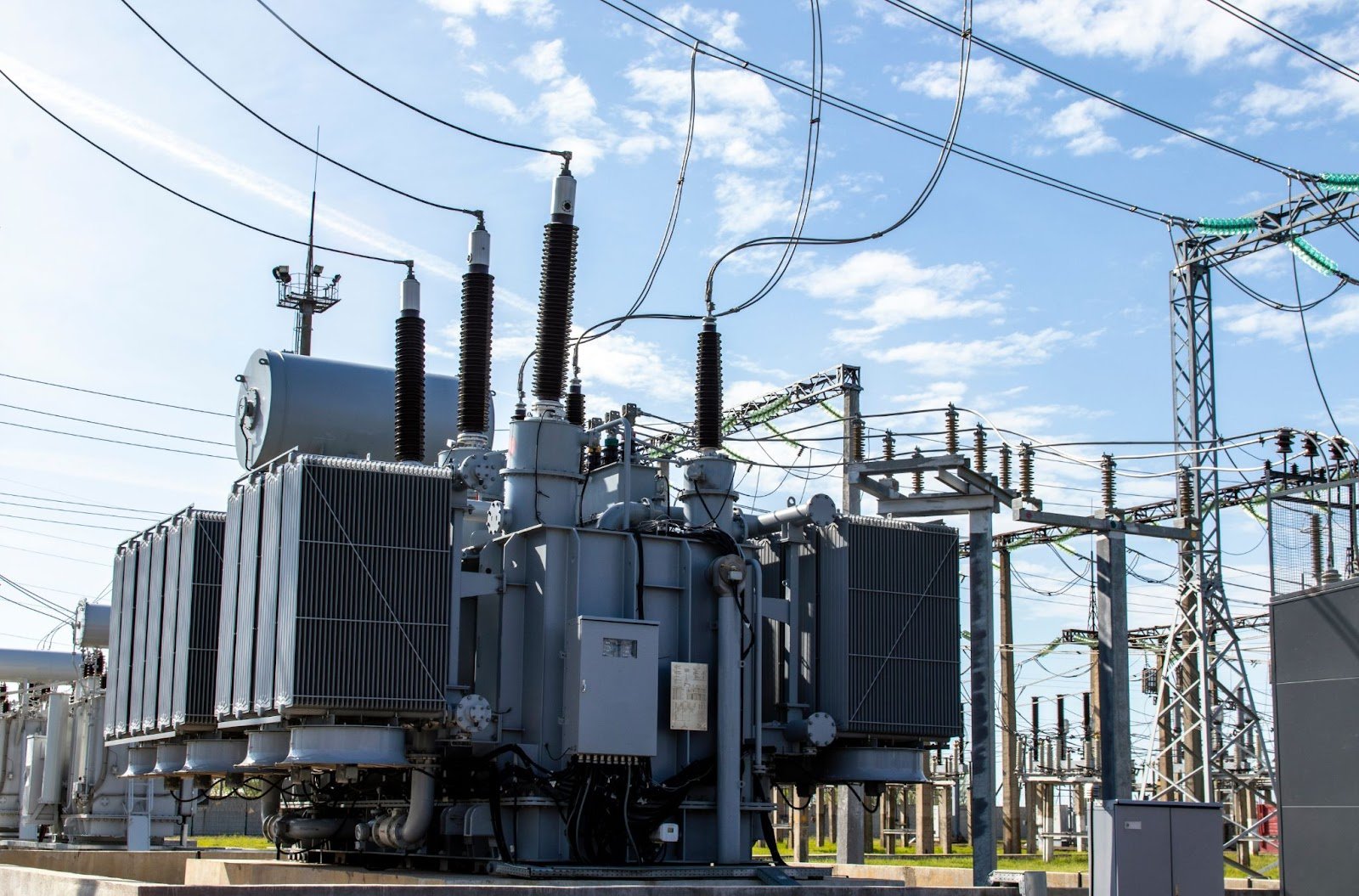
A typical scope on airport land includes a tilt-wall or insulated metal panel shell, an interior built for the planned halls, a generator and fuel yard, a chiller yard and the site utilities. We cover the shell under tilt-wall and precast data center shells, and the interior under data hall fit-out. The slab, equipment pads and underground services come first and set the pace for everything above them.
Power for these buildings is decided early. We prepare the service entrance, duct banks and switchgear rooms while the utility studies the new load. If the owner wants a second feed from a different substation, the route may cross airport property and need the authority's consent, which is one reason we open that discussion early.
What moves the price at an airport site
Three items move the budget more than any others. Ground lease terms come first, because the rent, the term and the reversion language change what an owner can justify. Site security requirements come next, since badging and escorts reduce crew productivity and add supervision cost. Finally, airfield design standards can push the size of detention, the lighting, and the exhaust arrangements, and each carries cost.
Against that, aerospace-heavy districts have trade labor used to precision work. Reports of large investments nearby are context for that capability. Area Development reported in May 2021 that a Tulsa-based aircraft component repair company's parent announced over 300 new jobs in the Tulsa metro, and Construction Equipment Guide reported on August 4, 2026 that an advanced composite materials maker plans a $65 million facility on 18 acres in the airport's North Development Area, with completion anticipated in 2028. Competing projects can tighten the market for concrete, steel and electrical labor, so we lock in key subcontractors early.
Working beside live aircraft operations
Active airfields impose their own safety rules on contractors: restricted movement areas, foreign object debris control, vehicle markings and radio rules where applicable. We train every crew member to the airport's site orientation before they start and keep a debris-control plan at the gate. Dust, standing water and loose material are not only housekeeping issues here. They can become airfield hazards.
Our general program is described under construction cleanliness and safety. For a data center, cleanliness has a second purpose. Dust that settles on switchgear, cable and raised floor becomes a commissioning problem later, so we protect finished rooms and keep the building envelope closed before sensitive equipment arrives.
Sequencing with the airport and the utility
The first schedule milestones are not construction at all. They are the lease execution, the airport authority's design review and the utility's service study. We assign dates and owners to those items and track them weekly. Construction begins when approvals allow, and we organize it so site utilities and slabs are complete before large-equipment deliveries arrive.
Some districts allow staged occupancy, with one hall energized while the next is under construction. Our phased expansion build-outs are planned so that live and under-construction zones are physically and electrically separated. Owners who want to compare this with a more rural industrial park can read our page on Pryor and the MidAmerica Industrial Park, and our page on Tulsa covers the metro's other parcels.
Looking at airport-area land?
Send the parcel, the lease terms if you have them, and the planned load. We will review airfield limits, utilities and access and tell you what the site can hold.
Common Questions
Can a data center be built on airport land at all?
Yes, if the lease, the height and lighting criteria and the stormwater rules allow it. Tulsa Airports lists more than 700 acres of development real estate, so we start by asking which parcels are available and on what terms. We then fit the design to the airport authority's standards.
Will airfield height limits affect the building?
They can affect cranes and rooftop equipment more than the building itself, because data centers are low-rise. Generator exhaust also needs review. We request the criteria before choosing building height, crane type and stack design.
How does contractor access work on airport property?
Expect badging, escorts for some areas, vehicle inspection and orientation training. These steps add time to each workday, so our schedules include them. We also plan deliveries so that trucks arrive at known windows.
Why would an aerospace company want a private data hall?
Some engineering and test data carries handling rules, and companies often want physical control. The Tulsa Regional Chamber counts 250 aerospace companies in the area according to News On 6, so the audience is real. Each owner defines its own requirements, and we build the physical space to meet them.
What is the difference between this district and the Port of Catoosa?
The airport district offers leased land, a security-minded setting and aerospace neighbors. The port, at the Tulsa Port of Catoosa, offers river, rail and heavy-haul access. We price both on one basis so owners can compare them.
Plan Your Oklahoma Data Center Project
Tell us about the site, the power and cooling plan and the schedule, and we will set up a review of scope, schedule, permits and inspections.
Request a Project Review