Modular Data Center Site Work and Construction in Oklahoma
A module that leaves the factory on a Monday still has to arrive on a prepared pad, and that is where most modular schedules slip. Modular data centers are factory-built units, either single containers or multi-section halls with power, cooling and fire protection already installed. The promise is speed and predictability. The reality is that speed moves from the factory floor to the site, where the foundation, the utility connection, the delivery route and the crane have to be ready on the day the modules arrive.
Oklahoma suits modular work for a practical reason: land and rail. The state has more than 12,000 miles of highway, and sites such as the 700-acre Iron Horse Industrial Park in Shawnee, where a first business tenant has already built a 45,000-square-foot plant, offer room for pads, laydown and heavy trucks. At the Chickasha municipal airport, 320 undeveloped acres were sold in 2025 with a first phase of 50 industrial lots of two to ten acres each planned. These kinds of lots, on or near highway and rail, are well matched to modular deployment.
We are not a module manufacturer, and we do not pretend to be. We prepare the site, build the foundations and yards, set and connect the modules with the manufacturer's crews, and bring the site through commissioning. Our role is to make the owner's modular plan work in the field.
Routes, bridges and permits for oversize loads
Module transport is an oversize load. Weight, width and height determine the route, the escort, and the permit conditions. In Oklahoma, ODOT's advisories can change a route within weeks: as of early November 2026, a bridge rehabilitation on US-412 from Sand Springs to Tulsa narrows lanes through spring 2027, the SH-97 Wilson Avenue bridge over the river in Sand Springs is narrowed to one lane in one direction through January 2027, and ramp and street closures at a major I-44 and US-75 interchange in Tulsa continue through summer 2028.
We survey the route before the manufacturer ships, looking for bridges, overhead lines, tight turns and construction narrowing. We then coordinate delivery windows with the carrier and the permit office. A module that must wait three days at a staging yard is a module that costs money, so we try to eliminate surprises before shipping starts.
The field work around a factory module
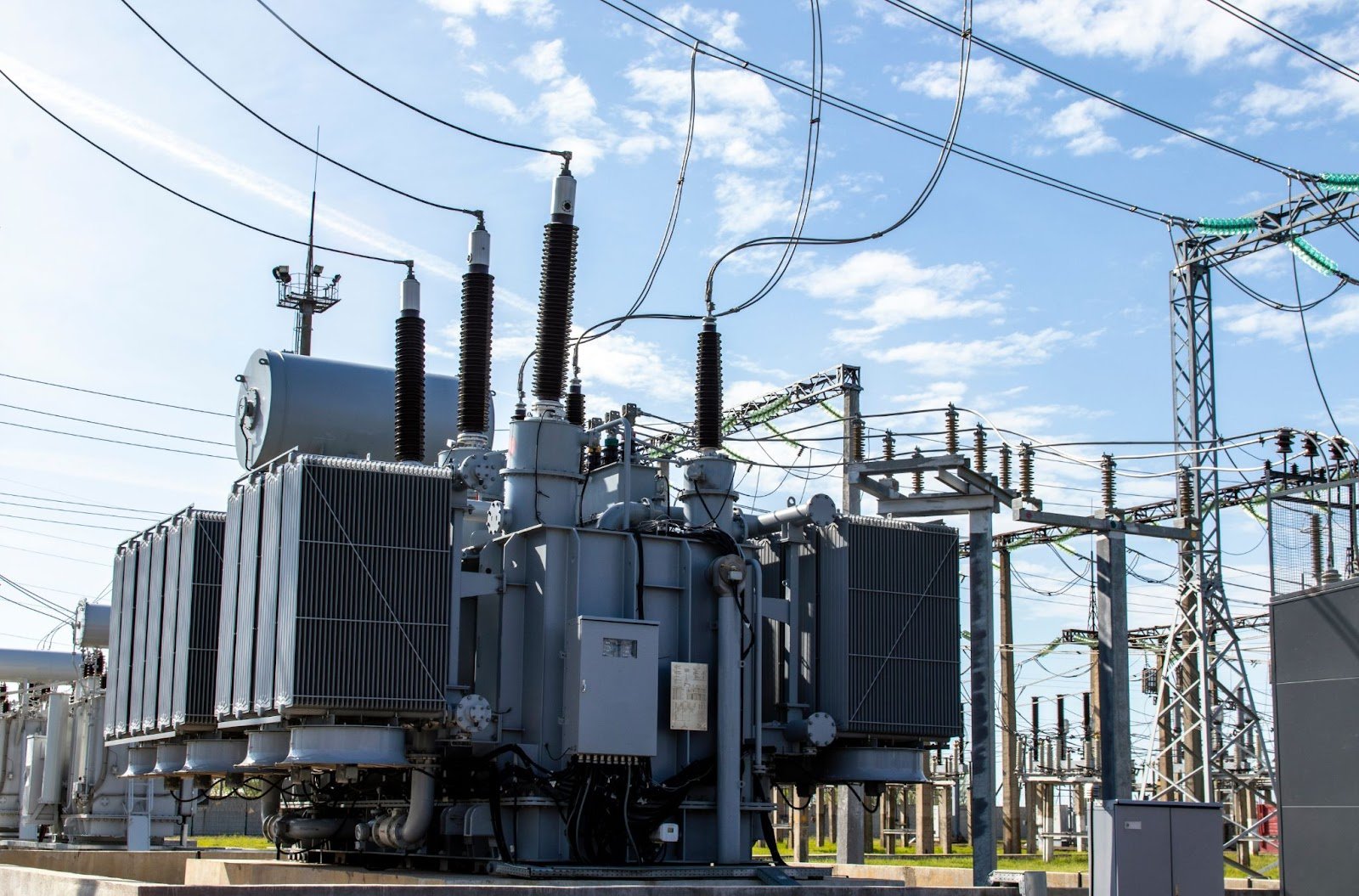
Our scope includes grading, geotechnical verification, foundations, utility trenching, transformer and switchgear pads, generator yard, cooling pads, security fencing and access roads. We set anchor bolts and embed plates to the manufacturer's template, and we verify elevations with a survey before the crane arrives. Foundations may be piers, a continuous slab or a ground-supported frame, depending on soil and the module design.
After setting, we connect power, cooling and controls, and test them with the manufacturer. The modular and prefabricated data halls page lists these tasks in more detail. When the module is the first phase of a larger plan, we lay out the site so the permanent facility can follow, as described under phased expansion build-outs.
Precast, tilt-up and modular side by side
Modular is not the only way to build fast. At MidAmerica Industrial Park, Building 630 is a 274,000-square-foot industrial building built with precast concrete tilt-panels, with a 40-foot interior clear height. Panelized construction competes with modular on many sites, and the right choice depends on size, density and the owner's timeline. A modular unit has factory quality control and fast installation, while a tilt-wall shell has more flexibility and lower cost per square foot at scale.
Some owners combine them: a site-built shell holds the electrical and mechanical rooms, and modular halls are placed inside or beside it. We help owners compare the options and show the schedule and cost for each. Our edge data center work often favors modular for the first site and site-built shells for repeat sites.
Where the savings really are
The savings in a modular project come from compressing the schedule and reducing field labor. They do not come from avoiding site work, which is still significant. Foundations, utilities, yard, security and commissioning remain, and in some cases they cost more because the units must be placed on tight tolerances.
Transport and cranes are a cost line that owners overlook. A heavy module requires a large crane, mats and a clear swing radius. We include those costs in our estimate and invite crane vendors to review the pad layout. Cooling is the other open question: some modules carry their own chillers, while others take chilled water from a shared central utility plant that must be built first. If the answer is a plant, the module schedule and the plant schedule have to be run as one, with the water, power and pipe stubs located before the foundations are poured, because a 30-minute change on the drawing becomes a trench rework in the field. Owners such as real estate developers and site owners who plan to lease modular capacity should also consider whether the site will be re-used when the module is removed or replaced.
Prove the pad before the module ships
Our approach is to treat the pad as a deliverable with acceptance criteria: elevation, flatness, compaction, bolt positions and utility stub locations. We produce a survey and a geotechnical letter, and we invite the manufacturer to inspect before shipping. A module that arrives on a pad that is off by an inch can lose days.
We also look at the long term. A modular site may be expanded or reused, so we leave space, conduit and fiber paths for more modules. For work in the Tulsa area near Sand Springs, see our Sand Springs page; for central Oklahoma, Shawnee describes the industrial land we know there.
Send the module drawings and the route
Share the manufacturer's drawings, weights and the delivery origin. We will respond with a pad design, a route review and a schedule that shows when the site must be ready.
Common Questions
How long does it take to prepare a site for modular units?
It depends on soil and utilities. Foundations and underground work usually take weeks, and utility connections may take longer. We start site work as soon as the manufacturer provides pad loads and bolt locations.
Do modular units need building permits?
Usually yes. The city or county will review the foundation, electrical service, and fire protection, and may treat the unit as a building or as equipment. We ask the building department early how they classify it.
Can modules be moved after they are installed?
Some can, but moving requires disconnecting utilities and hiring a crane. Owners who expect to relocate should specify bolted connections and plan for it from the start.
Is modular cheaper than site-built?
Sometimes, mostly because of schedule. For large halls, site-built tilt-wall may cost less. We price both for your site.
Plan Your Oklahoma Data Center Project
Tell us about the site, the power and cooling plan and the schedule, and we will set up a review of scope, schedule, permits and inspections.
Request a Project Review