Data Center Construction in Stroud and Chandler
Fiber routes and power lines tend to follow the same corridors as highways, and the Turner Turnpike is the corridor between Oklahoma's two largest metros. Stroud and Chandler sit at its midpoint, in Lincoln County, which is why we treat them as one market for data center construction: a pair of small cities on a limited-access road, about halfway between Oklahoma City and Tulsa, with room for sites that neither metro can offer cheaply.
Wikipedia reports that the Turner Turnpike opened in May 1953, runs 86.5 miles between Oklahoma City and Tulsa, and is signed as Interstate 44 for its entire length. The Oklahoma Turnpike Authority board approved a $39.2 million contract on September 23, 2024 for the second phase of the Stroud service plaza project, widening I-44 to six lanes between SH-99 and Ozark Trail Road west of Stroud, with work expected at the time of the award to finish in early 2026, weather permitting. We treat that date as a reason to confirm current conditions, not as a promise.
A builder values that kind of road. Heavy components reach the area on a corridor that is being widened, and owners who need a site that reaches both metros by road in about an hour have an obvious candidate.
Turnpike deliveries and a corridor under construction
The widening project west of Stroud matters for any equipment delivery. Lane shifts, shoulder closures and work zones affect oversize moves, and the authority's permit conditions apply to loads that use the turnpike. We check the current project status, plan moves for off-peak hours and stage materials at a nearby laydown area when the access ramp is restricted.
A Chandler service area serving eastbound turnpike traffic opened in June 2020, and the turnpike has an interchange at Chandler, according to Wikipedia. Interchanges at both towns let us choose the best access for each delivery. A site near an interchange can receive trucks without long drives on local roads, which helps both schedule and neighbor relations. Our truck courts and access roads are designed for the turning radius of the largest loads.
Two small cities, one corridor
Greater Oklahoma City Partnership's Chandler page describes the Lincoln County seat as on Interstate 44 and Route 66, with nearly 2 million people within a 60-mile radius, a jet-capable regional airport and rail access. Wikipedia reports that the City of Stroud owns the Stroud Midway Industrial Park. City-owned industrial ground can simplify land control, because the city is both seller and permit authority and may work with an owner on terms.
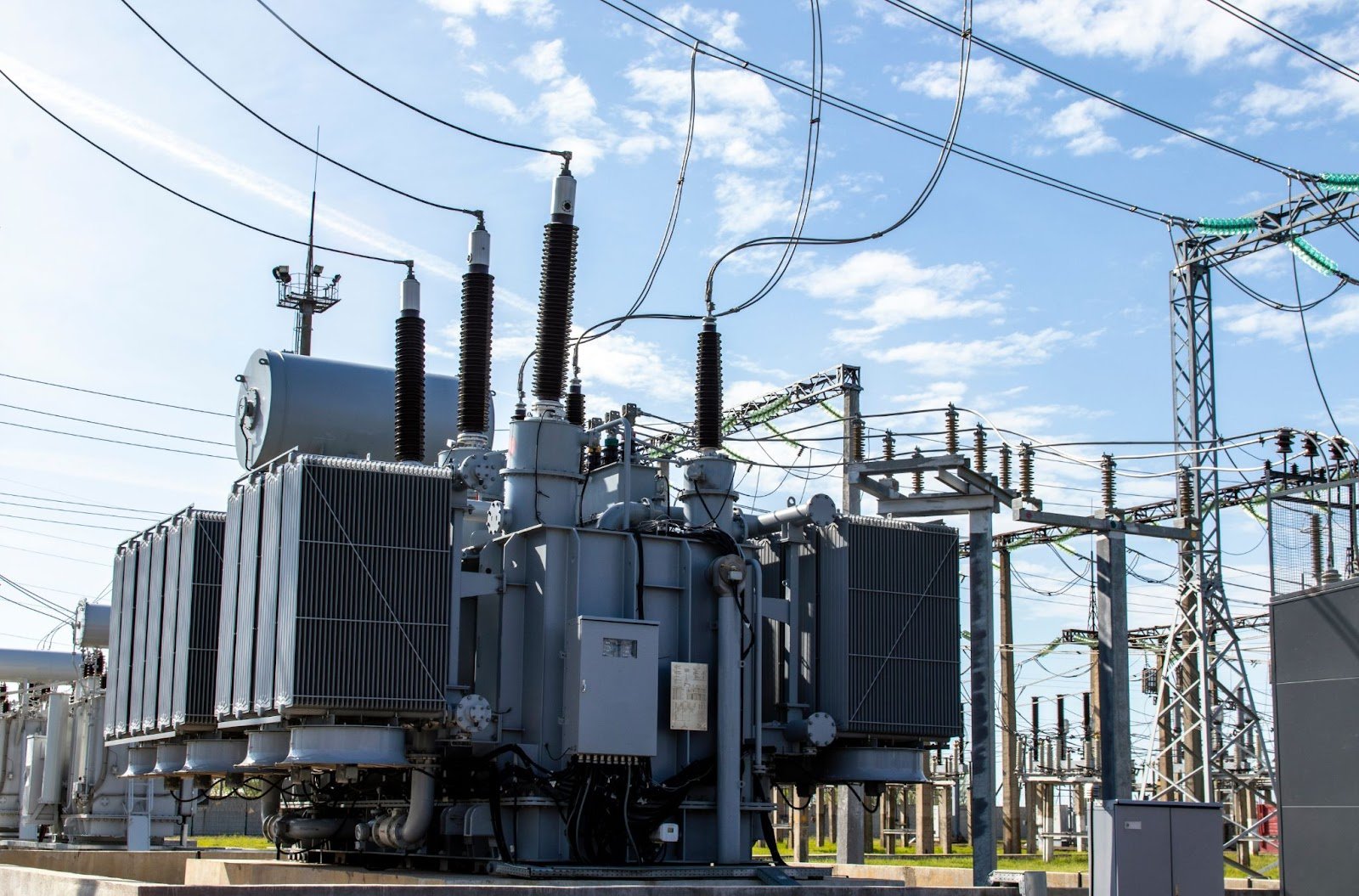
Not every corridor site is suited to a data center, and we say so. Power capacity depends on the transmission lines and substations near the parcel, which a map of the highway does not reveal. We ask the electric provider where lines cross the corridor, what voltage they carry and how much load they can add. That is the first question for any site here, and we raise it before spending design money.
Tornado history and what it means for design
Wikipedia reports that the 1999 Oklahoma tornado outbreak destroyed a 53-store outlet center and a foodservice distribution center in Stroud, neither was rebuilt, and about 800 jobs were lost. It also reports that a tornado on March 30, 1897 destroyed most of the young town of Chandler and killed 14 residents. These are history, not forecasts, but they make a point owners already know: central Oklahoma gets violent weather.
We respond with design that works at three levels. The shell is a stiff envelope with a strong roof diaphragm. Rooftop and yard equipment is tied down with engineered connections. The operations plan assumes the town may lose power and road access for a day, so on-site fuel storage, spare parts and sleeping arrangements for staff become part of the design brief. Our work on generator yards and fuel systems follows that logic.
Starting at the substation
Power and cooling water decide the site, so we start at the substation. We ask the provider about capacity, the study process and what upgrades the owner would fund. For cooling, we look at whether a closed-loop system can serve the building with limited water, which is common for corridor sites without large municipal supply.
We also visit the county and both cities early, because incentives, road use agreements and zoning vary. Our design-build delivery approach keeps design, utility coordination and construction under one agreement, which suits owners who want a single point of responsibility. The owner sees one budget, one schedule and one team, and the utility sees one contact who can answer both design and field questions.
Owners looking between the metros
Carriers like the corridor because their long-haul fiber already follows it. A small node or a regeneration facility near an interchange can serve both metros and local customers. Our overview of telecom and network carriers explains what a carrier needs from a building: diverse entrances, secure access and power continuity.
Enterprise owners like the midpoint for a recovery site that is not in either metro, and developers like it for powered shells. For comparison, Guthrie offers a north-metro position on I-35, and Shawnee offers I-40 access and a rail spur.
What to confirm with each city
Stroud and Chandler are separate jurisdictions with their own building departments, so we confirm the adopted code edition, local amendments and permit process with whichever one governs the parcel. Statewide, the commission adopted newer International Codes, and the state-adopted National Electrical Code applies, yet local editions can lag. We record the answer in writing.
Parcels outside either city fall under the county, whose rules differ. A turnpike frontage parcel may also need coordination with the Oklahoma Turnpike Authority for access, signage or drainage. We list those approvals in the permit matrix and assign owners and dates before design begins. Where a parcel straddles a city limit, we also confirm which fire district responds, because the answer changes the fuel storage review and the access road width.
Weighing a turnpike-corridor site?
Send us the parcel and the load. We will check access, utility capacity and weather design and give you a clear view of what the site can support.
Common Questions
Is the midpoint between Oklahoma City and Tulsa useful for a data center?
It can be, for recovery sites, carrier nodes and enterprise halls that need to reach both metros. Greater Oklahoma City Partnership reports nearly 2 million people within a 60-mile radius of Chandler. Power capacity at the parcel still decides, so we check it first.
How will the turnpike widening affect deliveries?
The authority approved a contract to widen I-44 to six lanes west of Stroud, expected at the time of the award to finish in early 2026, weather permitting. Conditions change after an award, we confirm the current work zones before each oversize move and plan off-peak windows.
What should we do about tornado risk?
Design for it at three levels: a stiff envelope, tied-down equipment and an operations plan that assumes a day without grid power or road access. We price the options so the owner can choose.
Do we buy from the city or from private owners?
Both are possible. Wikipedia reports that Stroud owns the Stroud Midway Industrial Park, so a city-owned parcel may be available. Private parcels along the corridor are another route. We review title, zoning and utilities for either.
Which cooling approach suits a corridor site?
A closed-loop system uses less water and fits where municipal supply is limited. The final choice depends on climate, capacity and the owner's efficiency targets. We confirm the water supply and discharge options in the first month.
Plan Your Oklahoma Data Center Project
Tell us about the site, the power and cooling plan and the schedule, and we will set up a review of scope, schedule, permits and inspections.
Request a Project Review