Data Center Construction in Noble, Oklahoma
Interconnection timelines, not construction durations, set the opening date of most data centers, and in Noble we plan the whole job around the date the utility can energize the site. A shell can be finished in months. A new service or substation may take longer, and it needs studies, agreements, equipment orders and sometimes easements before it starts.
We work with the electric utility and the city from the first week. We ask what capacity exists on the lines near the parcel, what a new connection would require, who pays for it and when it could be energized. Then we shape the building program, the phasing and the budget to match the answer.
Noble offers a practical combination for that conversation: a Cleveland County location along U.S. Route 77, the Canadian River to the west, and a city government that has been planning its growth. Our job is to turn that setting into a site an operator can finance.
A river boundary and a highway spine
Noble's western line is the Canadian River, and McClain County is across it; Norman adjoins Noble to the north. U.S. Route 77 runs through town, about 28 miles north to central Oklahoma City and about 11 miles south to Purcell. For a data center owner, a river on one side and a state highway on the other mean the usable land is shaped like a strip, and utility lines tend to follow the highway.
That has consequences. Power, fiber and water often share the same corridor, so a parcel near the highway can reach all three sooner than a parcel farther east. A parcel near the river may face floodplain review. We check both before an owner buys, and we compare Noble with Norman and Moore, where grid and fiber conditions differ.
Safety on a floodplain-adjacent, highway-fronting site
Work near a river brings groundwater, soft soils and seasonal flooding into the safety plan. We pump and shore excavations, keep heavy equipment on stable ground and watch the weather during every lift and pour. Open trenches are protected from rain runoff and barricaded at night.
Highway frontage adds traffic. Trucks entering and leaving the site need a deceleration lane or a flagger, and we agree on the plan with the state transportation department and the city. Electrical safety is handled through lockout and tagging, arc-flash training for energized work and a written plan for tie-ins to live utility lines, which are done only by the utility or its qualified contractors.
Interconnection as the lead task
On every project, we assign a person to the utility relationship. That person submits the load request, tracks the study, attends the meetings, reports to the owner and keeps a calendar of the utility's milestones. We write the energization date at the top of the schedule and measure everything else against it.
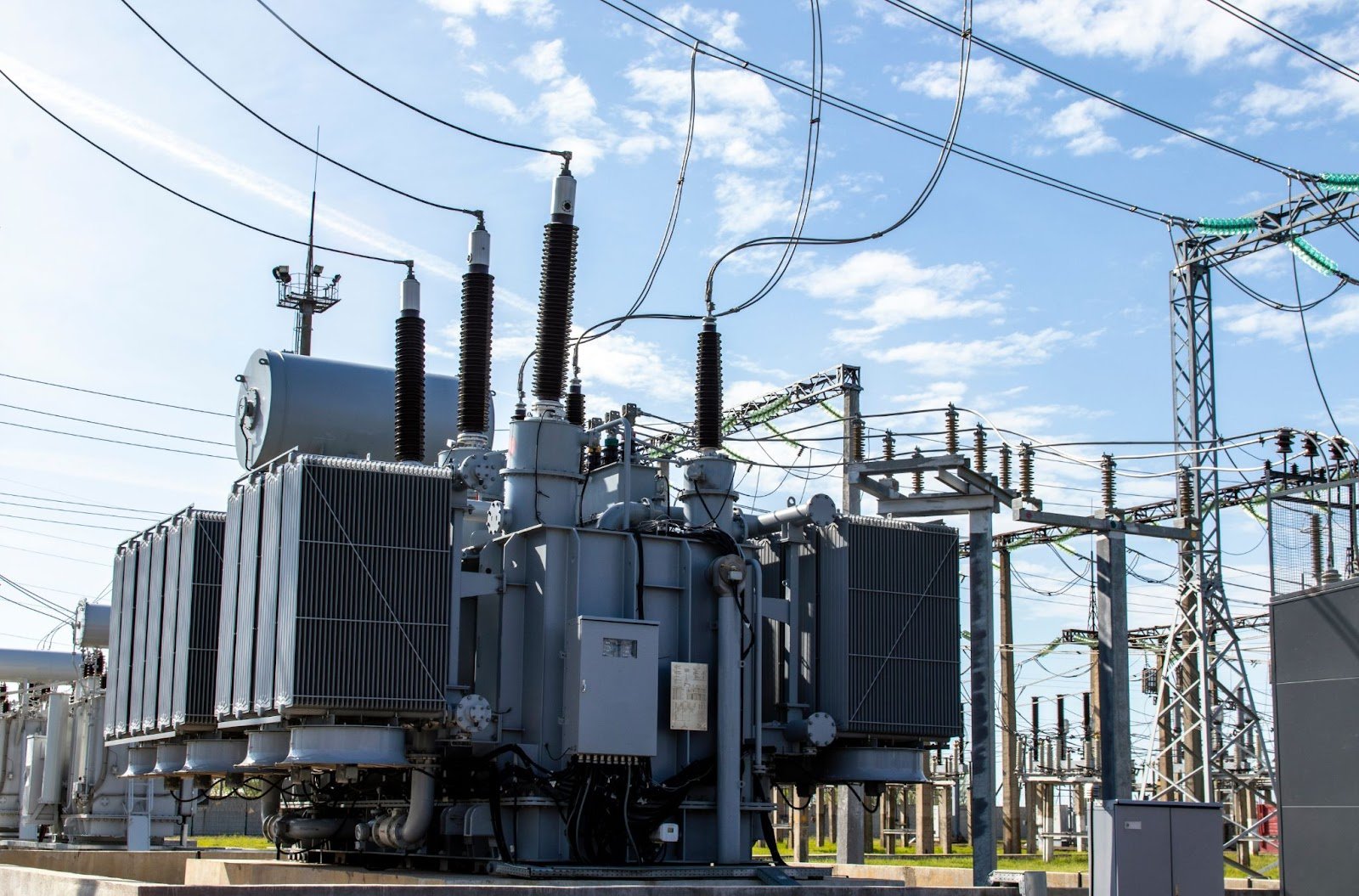
That approach is applied to utility and substation site work, where we prepare the pad, the grounding, the oil containment, the access road and the conduit to the switchgear. It also applies to on-site substation yards, which the owner may build, share or lease to the utility, depending on the agreement.
Approvals that run alongside the utility study
The city commissioned the University of Oklahoma Planning Department to prepare a 2025 Community Development Plan. For economic development it partners with the Cleveland County Industrial Council as well as the Norman Economic Development Council. A project in Noble should expect to meet city staff who are used to thinking about growth, and to be asked how the building fits the plan.
We prepare a land-use summary, a site plan, drainage calculations and a utility letter for the city, and we meet staff before filing. Permit review sits with the city's building officials, and any floodplain or access review adds time, so we put those early in the sequence.
Shell and core as the first phase
When a utility date is uncertain, a shell and core building is the practical first phase. We coordinate site work, foundations, the slab, structural steel or precast, roofing and the core electrical and mechanical rooms, then leave the data halls for a tenant or a later phase. Our data center shell and core scope is built for that, with an envelope that can wait and a structure sized for the final load.
This lets an owner start earlier, lease sooner and add capacity in steps, which is the idea behind phased expansion build-outs. The trade partners we schedule and inspect do the concrete, steel, roofing and electrical work, and we keep one set of drawings and one schedule. The structure is detailed so that later work, such as a crane lift of generators or an added bay of data hall, does not require cutting into what is already built.
Schools, growth and the competition for utilities
On August 25, 2026, voters in the Noble school district approved two measures: $86.3 million toward construction and $3.6 million for vehicles and equipment used in student transportation. The biggest item, at $42.2 million, pays for a school serving grades five and six, on 28 acres the district purchased in 2025.
For a data center owner, that is a reminder that the city is adding public facilities while it also courts private investment. Each new school or road adds load, traffic and review work. Colocation and wholesale operators should ask the utility how its other commitments affect their place in line, and we help them frame that question in writing.
The practical lesson is to avoid assuming a favorable position in any queue. We ask for written confirmation of what has been reserved, what remains in study and what could change, and we put those dates in the owner's risk register next to the cost of delay.
Planning around a Noble interconnection date?
Send the parcel and the target load. We will contact the utility, review the site and give you a schedule that starts with energization.
Common Questions
How long does utility interconnection take for a large load?
It varies with the size of the load and the state of the grid near the site. Only the utility can give a date, so we submit a clear request early and update the schedule with each response.
Why build a shell before the data halls?
A shell lets an owner start while the power timeline is still being resolved, and it lets a tenant finish the interior to its own design. The risk is carrying cost, which we price against the benefit of starting sooner.
Does the Canadian River affect where I can build?
Parcels close to the river may fall under floodplain rules and need extra drainage design. Many parcels farther from the river are unaffected, and we confirm the status of each before design.
What can the owner do to speed up the substation?
Order equipment early, secure easements, deliver a complete load profile and keep the site ready for the utility's crews. We track those items and report the status weekly. A weekly status sheet lists each open item, who holds it and how many days it has been open, which makes slow responses visible to everyone before they become schedule problems.
Plan Your Oklahoma Data Center Project
Tell us about the site, the power and cooling plan and the schedule, and we will set up a review of scope, schedule, permits and inspections.
Request a Project Review