Data Center Construction in Okmulgee, Oklahoma
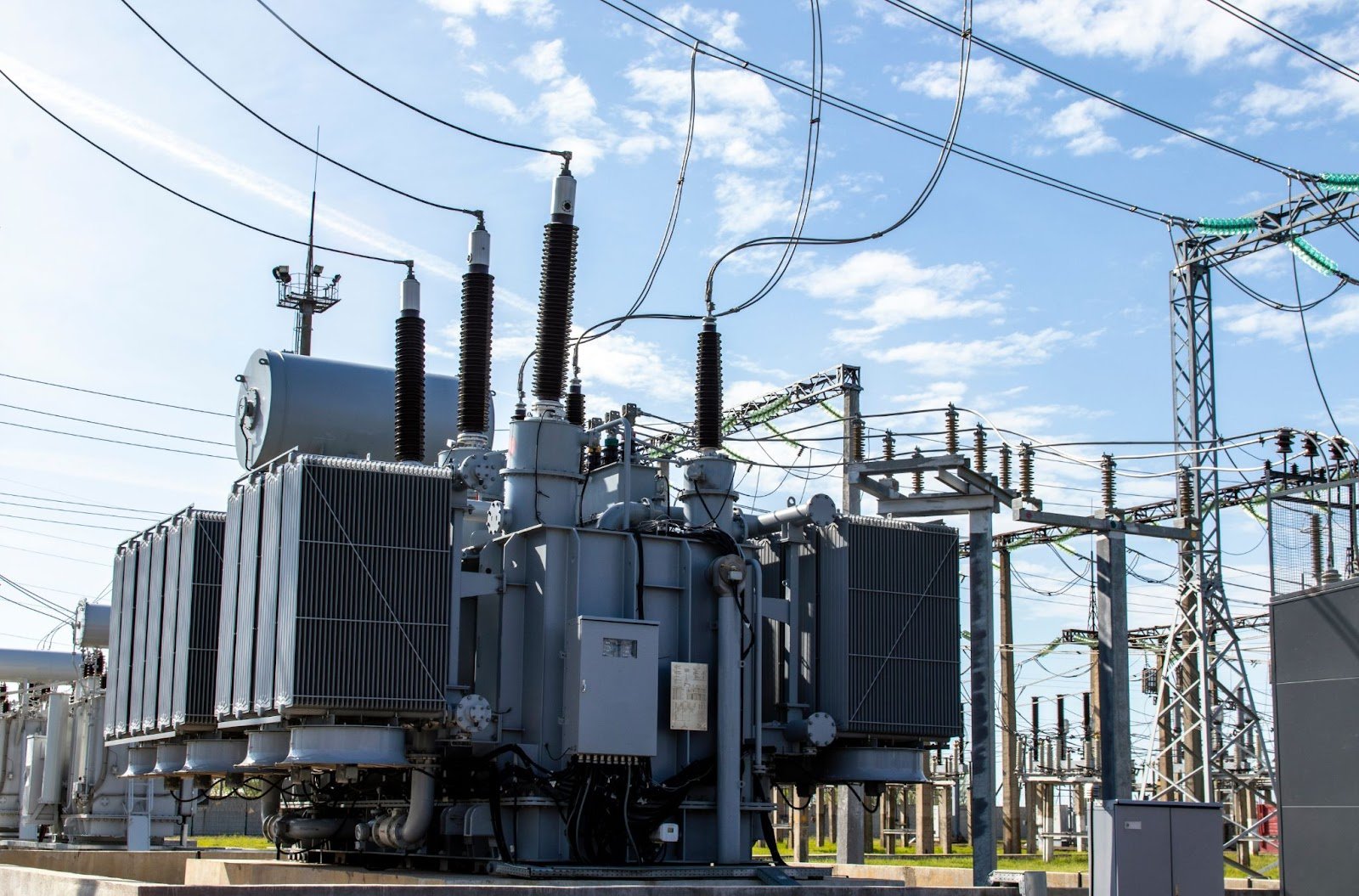
Long-lead equipment decides when a data center opens, and in Okmulgee we organize the schedule around the delivery of transformers, switchgear, generators and chillers. We ask for ship dates before the owner signs a lease or a purchase agreement, and we say plainly when a promised date looks optimistic, and we show how each date translates into a pad, a room or a crane lift.
Tulsa lies 38 miles north of Okmulgee along U.S. Route 75, the main north-south road, while U.S. Route 62 and State Highway 56 add other approaches. BNSF Railway runs freight service to Okmulgee on a line first built in 1900, so heavy items can arrive by more than one mode.
We schedule, supervise and inspect the trade partners and keep a single delivery calendar for the whole project.
A delivery calendar for the whole project
We start with the list of equipment and the manufacturers' quoted lead times, then work backward from the energization date. Each item gets a release date, a ship date and a set date, and each set date is linked to a pour, an erection or a utility milestone.
On site, we plan laydown, cranes and temporary power. If a delivery is early, we know where it goes and who will inspect it. If it is late, we show what moves with it. We hold a delivery meeting every week with the trade partners, the transporter and the owner's representative, and we publish a three-week look-ahead afterward.
Procurement as a construction task
We treat procurement as part of construction, not a separate chore. Our long-lead equipment procurement service puts submittals, approvals and factory tests on the same schedule as the site work.
We also review equipment dimensions and weights against door sizes, floor loads and crane reach. A generator that cannot fit through a wall opening or a chiller that exceeds a pad rating is a costly surprise, and drawing review catches it early. We also check the shipping dimensions against route restrictions, because a unit that clears the factory door may not clear the last bridge or the last gate.
Parcels in and around Okmulgee
We build on parcels inside the city and across Okmulgee County, and we confirm power, fiber, water and road access for each. For owners comparing sites in the Tulsa area, we also describe conditions in Bixby, Jenks and Sapulpa.
The airport is another asset for deliveries and visitors. The concrete main runway at Okmulgee Regional Airport, labeled 18-36, measures 5,150 by 100 feet, and the facility has been under the management of the Tulsa Airports Improvement Trust since July 1, 2015. An airfield of that size can serve visiting engineers, specialist technicians and urgent parts, which shortens the time to fix a problem at a facility that cannot afford a long outage.
What drives cost when delivery matters
Freight, rigging and storage can add substantial cost when equipment arrives out of order. We estimate them separately and carry an allowance for expedited shipping and temporary storage, so the owner sees the price of delay. A short list of alternates, such as renting temporary cooling or switching to a different model, is kept ready and priced.
The next group is cooling and water. Cooling plants need pads, piping, treatment and drainage, and sites with limited water favor air-cooled designs. Water for cooling is a secondary concern in this market, but we still ask the city what is available and under what conditions. We show the comparison in quantities, with the electric load and the water use side by side.
Site conditions come next. A former industrial parcel may need soil management or a deeper foundation, and the cost depends on what the borings find. We would rather report that in a feasibility memo than in a change order.
Buildings that fit the city and its sites
A regional colocation data center or an enterprise data center fits a city with a rail line, a four-lane highway and available industrial land. Utility-scale support buildings, such as a substation yard or a central plant, may join them.
We also design for expansion. Extra pad space, conduit stubs and structural capacity let the owner add equipment in steps without disrupting the first phase. We also reserve crane paths and laydown for later deliveries, since a second round of equipment will need access to a site that is already occupied.
Industrial land with a past
A brownfield industrial park broke ground in October 2022 under the Okmulgee Area Development Corporation, funded partly by $2.1 million from the U.S. Economic Development Administration and $635,430 raised locally. Backers estimated 175 jobs and $50 million in private money.
A second site, the Okmulgee Business Complex, was built on an old refinery site at the Highway 75 and Fairgrounds Road intersection, on its southwest side. The state's environmental quality agency cleared the property in 2012 with a "Certificate of No Action Necessary" for brownfields, and the first phase of availability listed 40 acres of industrial land along with eight commercial lots and three pad sites for retail. Brownfield sites need extra due diligence, which we support with records review and soil sampling, and the owner should read the certificate and any restrictions before purchase. Foundations, utility trenches and stormwater features are drawn with those restrictions in mind.
Scope from pad to power
Our scope includes site development, mission-critical slabs, a shell, electrical and cooling yards, and commissioning coordination. On a former industrial site, we also coordinate environmental records, soil handling and any required notifications with the owner's consultants.
We work with utilities and power developers on interconnection steps, and we sequence trenching, duct banks and pads so that none waits on another. Each trade partner works under our schedule and inspection, and the owner receives the same set of weekly reports regardless of which trade is on site.
Have equipment lead times to plan around?
Send us the equipment list and the parcel. We will build a delivery calendar and show where the dates are tight.
Common Questions
Why start with equipment lead times?
Because they usually set the energization date. A building can be finished earlier, but without switchgear and generators it cannot run.
Can rail help with heavy loads?
It can carry heavy items over most of the distance, with a final truck leg. The plan needs sidings, cranes and permits, which we coordinate in advance, and we confirm that the receiving pad and the lift equipment can handle the weight before the item leaves the factory.
What should an owner check on a brownfield site?
The environmental certificate, any use restrictions and the results of soil and groundwater testing. We help assemble these records and plan site work around them.
How do you handle expedited shipping costs?
We estimate them separately and show them as options. Sometimes paying to expedite one item saves more in schedule than it costs, and sometimes the better answer is to resequence the work and accept a later date for a single room. We lay out both choices with prices.
Who performs the construction?
Licensed trade partners do the physical work, and we schedule, supervise, inspect and coordinate them.
Plan Your Oklahoma Data Center Project
Tell us about the site, the power and cooling plan and the schedule, and we will set up a review of scope, schedule, permits and inspections.
Request a Project Review