Data Center Construction in Blanchard, Oklahoma
Cooling water has to come from somewhere, be stored somewhere and go somewhere afterward, and in Blanchard we begin every mechanical yard with those three questions. A plant that uses evaporative cooling can draw on the water system for large volumes at peak hours. A closed-loop plant uses far less, but still needs makeup water, a place to drain and a plan for chemical treatment.
We build the pads, tanks, pump rooms, piping and drainage that support a data center cooling plant, along with the electrical feeds and controls that run it. The owner's designer chooses the cooling method, and we make it constructible, schedule it and test it.
Blanchard is growing, and so is its water system, which gives owners something to ask about and something to plan around. The commissioning of a mechanical plant is the second part of our work, and we keep it in view from the day the pad is laid out.
Approvals for water, drainage and fuel
A cooling plant needs a water service agreement, a plan for discharge, drainage approval for the yard and, where generators are present, fuel storage review. The city handles site plan and building permits. State agencies may be involved in water use, discharge or storage, depending on the volumes.
We assemble these into one register and start the longest items first, which are usually the water agreement and the utility service. The local building department reviews the permit, and we schedule inspections for the underground piping, the pads and the tanks before they are covered.
The mechanical yard from pad to flush
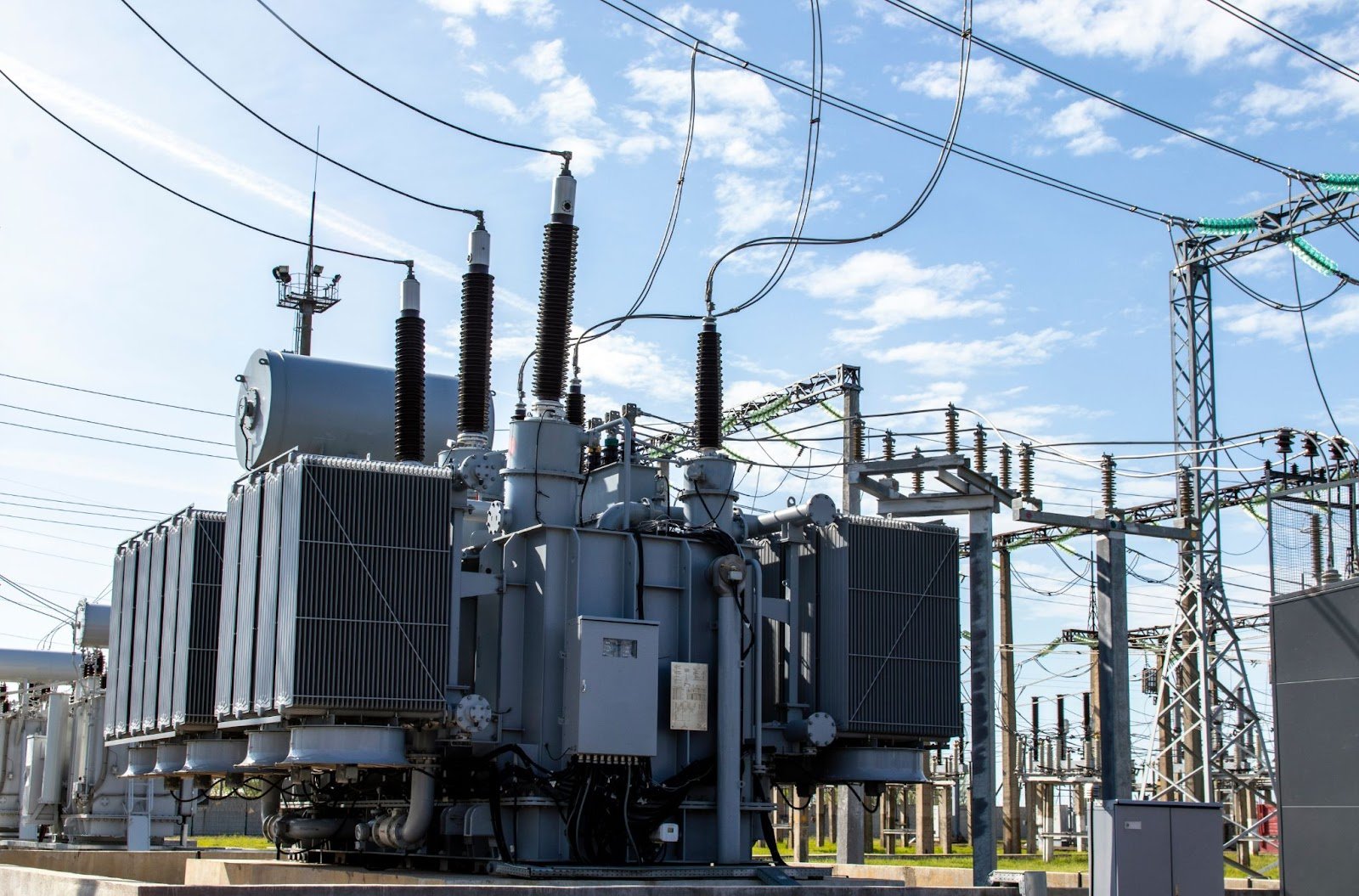
The work begins with grading and drainage so rain does not collect around equipment. Then come underground piping and conduit, foundations for chillers, cooling towers, pumps and tanks, and the supports and containment for chemicals. After the equipment is set, we coordinate piping, insulation, controls and electrical connections, followed by cleaning, flushing, filling and testing.
For chiller and cooling plant pads, we design slabs for the operating weight of the equipment, including water, and for vibration limits set by the manufacturer. Trade partners do the work under our supervision, and we inspect each stage.
A water system that is being expanded
On May 21, 2024 the Oklahoma Water Resources Board approved $9,200,000 in borrowing for the Blanchard Municipal Improvement Authority, to extend its water and sewer mains, rework a booster pump station and put up a water storage tank, with growth cited as the reason. For a data center owner, that is a useful signal: the system is being expanded, but it is expanded for residents, and a large industrial user needs a separate conversation.
We ask the authority how much capacity exists, how much is planned, who funds extensions and what rules apply to a high-volume customer. We also size on-site storage so the facility can ride through a short supply interruption without hurting cooling, and we describe that tank in the budget as its own line. Treatment equipment for scale and biological growth is sized with it, since poor water quality shortens the life of every chiller and heat exchanger on the loop.
Operators who care about cooling water
Cooling water matters most to operators of dense computing, including AI and GPU cloud operators, because high-density racks produce more heat per square foot. They often choose liquid cooling, which changes the plant but not the question of where heat is rejected.
It also matters to developers who prepare powered land. A parcel with a water letter, a drainage plan and a power commitment is far more valuable than one without. We help prepare those documents, and we state which assumptions in them depend on a third party, such as the authority or the electric utility.
Water, chemicals and electrical work together
A mechanical yard combines water, electricity and rotating machinery. We handle that by controlling energization, protecting open excavations, bracing tanks during fill, providing eyewash stations where chemicals are stored and training all trade partners in lockout and tagging.
Flushing and filling bring their own risks, including pressure testing, hose handling and discharge of flushing water. We write each test procedure, define the pressure limits and keep the area clear. After testing, water is drained or treated according to the discharge rules.
Commissioning in view from the first sketch
We write the commissioning plan for the cooling plant while the yard is still being drawn. It lists each test, the acceptance values and the order: pressure test, flush, fill, pump start, controls check, heat load test and failure test. That order shapes the construction schedule, because it determines when power, water and controls must be available.
Turnover then means a documented set of results, not a verbal promise. We call this integrated systems commissioning when it covers power, cooling and controls together, and it is the main way an owner knows the plant will work under load.
Facilities with large mechanical loads
The strongest fits are a central utility plant serving several halls, a generator and fuel yard next to the plant, and a campus where cooling is shared across buildings. Each needs space, access for maintenance and room to grow.
Smaller buildings use packaged units on the roof or in a small yard. The same questions apply, and the same tests prove the plant.
Blanchard and the nearby routes
In the northwest part of McClain County, the town covers 30.56 square miles; its altitude is 1,309 feet, and part of the town extends into neighboring Grady County on the west. State Highway 76, U.S. 62 and U.S. 277 are the roads that serve the town, and Oklahoma City is roughly 27 miles north. That layout gives owners several routes for deliveries and for staff.
We compare it with Moore and Mustang to the north, and with Chickasha to the west, where utilities and land differ. A $66.1 million bond for Blanchard Public Schools went to voters on August 27, 2024, covering a high school saferoom, safety improvements and a newly built baseball and softball complex, another sign of a growing community.
Planning a cooling plant in Blanchard?
Send the load and the cooling method. We will contact the water provider, lay out the yard and outline the tests that prove the plant before turnover.
Common Questions
How much water does a data center cooling plant use?
It depends on the cooling method and the load. Evaporative systems use the most, while closed-loop and dry systems use much less. We help owners compare options with the water provider's limits in mind.
Does the town have capacity for a large industrial customer?
That is a question for the water authority. We ask for current capacity, planned expansions and the rules for high-volume users, then report what the answer means for the design.
Why include a storage tank?
A tank gives the plant reserve if supply drops, and it can smooth peak demand. We size it from the load, the supply reliability and the owner's tolerance for risk.
What does turnover of a cooling plant include?
Test results, operating procedures, maintenance schedules, warranties, drawings and training. We assemble them as the work proceeds so the final handover is complete.
Can liquid cooling be added later?
Often yes, if the pads, piping routes and power were planned for it. We leave space and stubs for that expansion when the owner thinks it is likely.
Plan Your Oklahoma Data Center Project
Tell us about the site, the power and cooling plan and the schedule, and we will set up a review of scope, schedule, permits and inspections.
Request a Project Review