Data Center Construction in Verdigris, Oklahoma
Interconnection studies set the pace of a data center, and in Verdigris the first conversation we have is with the utility, not with the concrete supplier. We plan the service request, the substation yard and the feeder route before we draw a building, because a shell that is ready a year before power is only an expensive warehouse.
The town takes its name from the nearby Verdigris River, and the Tulsa ports sit on that river as well. That industrial setting matters to an owner with a large electrical load, since the area already has heavy users, rail and barge freight, and a workforce used to large-scale plant construction.
We coordinate the work for the owner. Trade partners place the concrete, erect the steel and pull the cable, and we schedule, supervise and inspect each of them against one program.
From load letter to energization
A Verdigris project begins with a load letter that states the initial and ultimate megawatts, the voltage the owner expects and the date it wants to energize. Owners who plan to grow in stages should say so in the letter, since the utility will size its study and its equipment around the ultimate load, not just the first phase. We help the owner's engineer prepare it, submit it, and then track every study, deposit and construction milestone the utility publishes.
In parallel, we advance site work that does not depend on the answer: survey, geotechnical borings, grading and drainage design. The substation yard, the duct banks to the building and the generator yard are laid out together, so protection and metering requirements are known before any conduit is bought.
Services that sit around the utility connection
The services most often paired with a power-driven site here are utility substation site work, electrical duct banks and service entrances and permitting and utility interconnection. They share survey control and trench corridors, so a single schedule serves all three. A shared trench corridor also means that one geotechnical report, one set of utility locates and one erosion plan cover the whole package.
Backup power follows. Our work on generator yards and fuel systems covers pads, spill containment, fuel piping and the access that tanker trucks need, all of which depend on how the utility feeds arrive.
Where the money goes on a power-heavy site
Switchgear, transformers and generators usually drive the budget more than the building does. We price them from manufacturer quotes with release dates attached, because a price that expires before the order is placed is not useful to an owner.
The second cost driver is the utility's share of the work. Contributions in aid of construction, line extensions and protection upgrades vary by site and by feeder, so we ask for estimates early and carry an allowance until the utility confirms. Site soil and drainage come third, and we measure them with borings instead of assumptions. If the borings show soft clay or a shallow water table, the foundation design and the earthwork budget change, and the owner should hear that before the land is purchased.
What gets built beside the substation
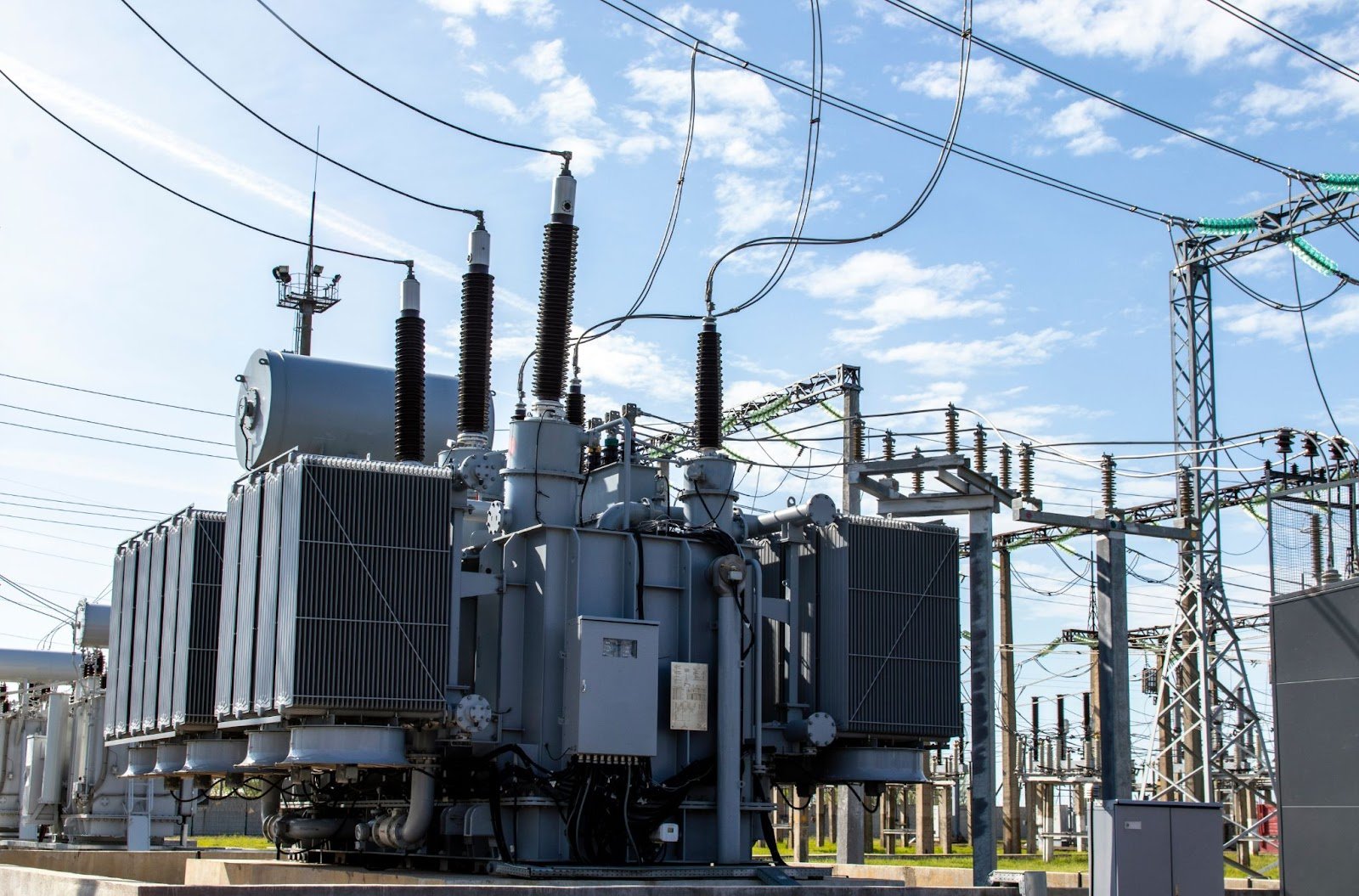
An on-site substation yard is often the first structure on a power-led site, followed by a shell for data halls and a central utility plant for cooling. A battery energy storage yard may join them if the owner wants to smooth demand or ride through utility events.
We plan shell and core as the second phase of work, with column grids and slab thickness set for the hall loads the owner expects. Roof framing and tilt-up or precast panels are chosen once the power timeline shows how soon the first hall will need to open. A site with delayed power gets a simpler, cheaper shell first, while a site with early power gets a faster structure.
How we work with the utility and the county
We keep the utility, the county and the owner on the same schedule, and we speak the language of utilities and power developers, who often co-plan the connection with the operator. Each gets a short written update on open items, and we raise problems when they appear, since a missed protection-relay submittal can cost more time than a delayed pour.
Our approach to preconstruction and estimating puts an electrical engineer, a civil engineer and the estimator in the same early meeting. That is how a one-line diagram and a site plan end up agreeing. We also hold a short review after each major milestone, so lessons from the substation work reach the shell trade partners before the next phase begins.
Permits and approvals for the site
The local building department reviews structural and life-safety drawings, while the utility reviews its own interconnection design. Stormwater and grading permits come from the appropriate city, county or state authority, and the work near river corridors can raise floodplain questions that must be settled before anyone mobilizes.
We keep a permit log with each submittal date, reviewer comment and approval, and we do not schedule an inspection until the preceding work is complete and documented.
An industrial corridor with large loads
The Port of Catoosa is at the head of navigation for the McClellan-Kerr Arkansas River Navigation System, and a Port Authority site along the Verdigris River has barge and rail access. CF Industries operates a nitrogen facility in Verdigris on 800 acres, employing about 200 people, with annual UAN capacity of 2.0 million tons.
Those facts describe a setting where large electrical and water demands are familiar to local officials and the utility, and that familiarity can shorten the first round of questions an owner has to answer. Between Catoosa and Claremore, the town lies across the old U.S. 66 alignment, which is State Highway 66 today, and trucks get a direct east to west route from it. Similar comparisons can be made in Claremore and Owasso.
Have a load letter or a parcel in mind?
Share the megawatt target and the site. We will map the utility steps and the shell schedule that should follow.
Common Questions
How early should the utility request be filed?
As soon as the owner can state a load and a target date, even if the building design is incomplete. The utility study is often the longest item, and an early request lets the rest of the design follow its answer.
Can a shell be built before power is confirmed?
Yes, with caution. The owner can build shell and core while the study continues, but we advise phasing so that the risk is limited to the building, not the expensive electrical and cooling systems.
Does river proximity affect the foundation design?
It can. Soil borings and a floodplain review show whether the pads and slabs need drainage layers, elevation changes or special subgrade treatment. We commission both early.
Who is responsible for the electrical work inside the fence?
Licensed electrical trade partners install it under our coordination, and the utility builds and owns its side of the connection. We map the boundary between the two on the drawings so that responsibilities, tests and energization dates are clear to everyone.
What does the owner receive at turnover?
In practice we hand over a package of test reports, as-built drawings, equipment manuals and commissioning records, organized by system so the operations staff can find what they need.
Plan Your Oklahoma Data Center Project
Tell us about the site, the power and cooling plan and the schedule, and we will set up a review of scope, schedule, permits and inspections.
Request a Project Review